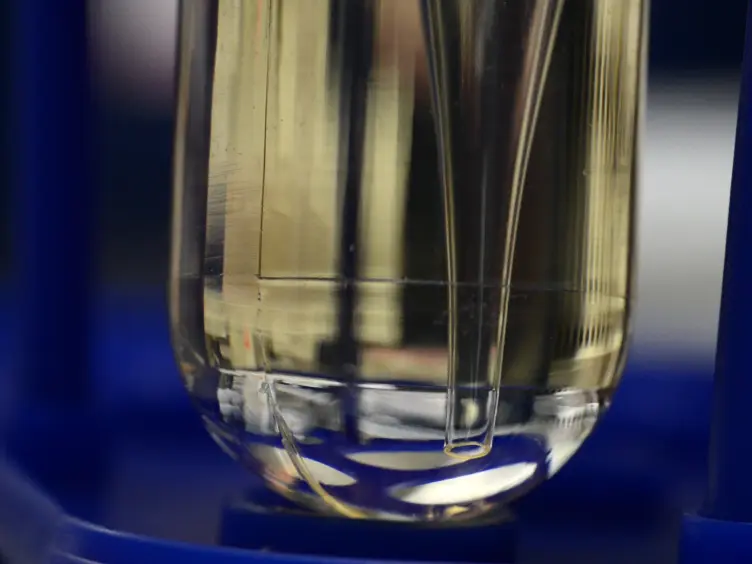
Here, we present a protocol for synthesizing virus-like particles using either baculovirus or mammalian expression systems, and ultracentrifugation purification. This highly customizable approach is used to identify viral antigens as vaccine targets in a safe and flexible manner.
A subscription to JoVE is required to view this content. Sign in or start your free trial.
Method Article
Expression and Purification of Virus-like Particles for Vaccination
In This Article
Summary
Abstract
Virus-like particles (VLPs) and subviral particles (SVPs) are an alternative approach to viral vaccine design that offers the advantages of increased biosafety and stability over use of live pathogens. Non-infectious and self-assembling, VLPs are used to present structural proteins as immunogens, bypassing the need for live pathogens or recombinant viral vectors for antigen delivery. In this article, we demonstrate the different stages of VLP design and development for future applications in preclinical animal testing. The procedure includes the following stages: selection of antigen, expression of antigen in cell line of choice, purification of VLPs/SVPs, and quantification for antigen dosing. We demonstrate use of both mammalian and insect cell lines for expression of our antigens and demonstrate how methodologies differ in yield. The methodology presented may apply to a variety of pathogens and can be achieved by substituting the antigens with immunogenic structural proteins of the user's microorganism of interest. VLPs and SVPs assist with antigen characterization and selection of the best vaccine candidates.
Introduction
Virus-like particles (VLPs) are an approved technology for human vaccination. In fact, some of the more contemporarily licensed vaccines, including the human papillomavirus (HPV) and hepatitis Β (HepΒ) vaccines employ this approach. VLPs are formed from structural proteins capable of self-assembly. The assembled particles mimic viral morphologies, but cannot infect or replicate because they lack viral genomes. VLPs can be expressed and purified from a number of prokaryotic and eukaryotic systems. A review of the literature revealed that different expression systems are employed at the following rates: bacteria - 28%, yeast - 20%, plant - 9%, insect - 28....
Access restricted. Please log in or start a trial to view this content.
Protocol
1. Mammalian Expression System for Generation of Influenza H3N2 VLP
- Subclone viral structural glycoproteins hemagglutinin (HA), neuraminidase (NA), and human immunodeficiency virus (HIV) Gag p55 into eukaryotic expression vectors, such as previously described pTR600.7
- Amplify DNA in chemically competent Escherichia coli (e.g., DH5α) and isolate transfection-grade plasmid using a plasmid purification kit as per manufacturer's instructions. Amount of DNA is dependent on yield and user's needs.
- Maintain mammalian cell line, 293T, in growth media containing 10% fetal-bovine serum (FBS) at 37 °C with 5% ....
Access restricted. Please log in or start a trial to view this content.
Results
VLP yields were variable by viral antigen construct design. In this protocol, we have demonstrated use of insect and mammalian cells for production of SVP or VLPs in supernatant and purification by ultracentrifugation. Four subtypes of DENV prM/E structural gene expression cassettes were used to construct the versions of DENV SVPs (demarcated as 1-4) in Table 1 and demonstrate a range between 1.1-2.6 mg of total protein in 0.6 ml volumes. For VLPs that require a three gen.......
Access restricted. Please log in or start a trial to view this content.
Discussion
We have used the techniques described above to successfully express and purify SVPs and VLPs composed of multiple structural proteins for various pathogens. In general, we use mammalian expression systems to generate our VLPs. However, in our hands, mammalian-cell derived CHIK VLP yields were low. CHIK VLP yield was more robust when using A recombinant baculovirus-insect cell system. In general, baculovirus-insect cell systems yield higher amounts of recombinant proteins, which may result from the higher cell densities t.......
Access restricted. Please log in or start a trial to view this content.
Disclosures
Authors have nothing to disclose.
Acknowledgements
We wish to acknowledge the prior members of the Ross lab who have helped optimize the protocol for maximal efficiency and yields.
....Access restricted. Please log in or start a trial to view this content.
Materials
| Name | Company | Catalog Number | Comments |
|---|---|---|---|
| Plasmid Maxi Kit | Qiagen | 12163 | |
| DMEM | Cellgro | 10-013 | |
| Lipofectamine | Life Technologies | L3000075 | Lipofectamine 2000, Lipofectamine 3000 |
| Opti-MEM I | Life Technologies | 31985062 | |
| Bac-to-Bac Baculovirus Expression System | Life Technologies | 10359-016 | |
| Cimarec I 6 multipoint stirrer plate | ThermoFisher Scientific | 50094596 | |
| Polyclear ultracentrifuge tubes | Seton | 7025 | Confirm appropriate tubes for ultracentrifuge and bucket size |
| Micro BCA Protein Assay Kit | ThermoFisher Scientific | 23235 | |
| Phosphate citrate buffer | Sigma | P4922 | |
| o-phenylenediamine dihydrochloride | Sigma | P8287 | |
| 0.22 μm vacuum filter top (500 ml) | Nalgene | 569-0020 | |
| Glycerol | Sigma | G5516 | |
| H2SO4 | Sigma | 339741 | |
| Sf-900 II SFM | ThermoFisher Scientific | 10902-096 |
References
- Zeltins, A. Construction and characterization of virus-like particles: a review. Mol Biotechnol. 53, 92-107 (2013).
- Jain, N. K., et al. Formulation and stabilization of recombinant protein based virus-like particle vaccines. Adv Drug De....
Access restricted. Please log in or start a trial to view this content.
Reprints and Permissions