This article demonstrates the standardized operation process of Zhuang medicine line moxibustion in experimental animals. To achieve repeatability and accuracy of Zhuang medicine line moxibustion, we developed a simulator to maintain strength, heat, and frequency. We constructed a dysmenorrhea model for experimental verification in rats with cold coagulation syndrome.
Method Article
Medicated Thread Moxibustion Therapy of Zhuang Medicine and its Application in a Rat Model of Cold-Congealing Syndrome of Primary Dysmenorrhea
Opens in a new tab
In This Article
Summary
Loading...
$$\rightleftharpoonup{xx}$$
$$\longleftharp{xx}$$,
$$\longrightharp{xx}$$,
Abstract
Loading...
$$\rightleftharpoonup{xx}$$
$$\longleftharp{xx}$$,
$$\longrightharp{xx}$$,
Zhuang medicine thread moxibustion therapy is one of the national intangible cultural heritages. It is a Zhuang medicine characteristic therapy that involves igniting ramie thread soaked in Zhuang medicine preparation solution and directly moxibustion on a certain acupoint or part of the body surface. This treatment method is characterized by combining drug, acupoints, and moxibustion, stimulating the skin's receptors at the acupoints through the warmth of moxibustion, affecting the biochemical metabolism of histiocyte and the function of the nervous system so that the drug ingredients can be absorbed through the skin. However, the therapeutic effect of Zhuang medicine line moxibustion is influenced by factors such as moxibustion intensity, heat intensity, and moxibustion frequency. Manual operation cannot precisely control each influencing factor. Here, we design a Zhuang medicine line moxibustion simulation instrument to maintain a constant force, heat, and frequency. The frequency and heat can be adjusted according to experimental needs, and it can be applied to the study of analgesic experiments to observe the analgesic effect of Zhuang medicine line moxibustion on pain animal models to solve the standardization problem of Zhuang medicine line moxibustion in the operation process of experimental animals.This study establishes a model of primary dysmenorrhea in rats with cold coagulation syndrome and provides a detailed introduction to the preparation, process, and precautions of Zhuang medicine thread moxibustion on the model of primary dysmenorrhea in rats with cold coagulation syndrome. The intervention of Zhuang medicine thread moxibustion on primary dysmenorrhea in rats with cold coagulation syndrome is evaluated by twisting score and infrared thermal imaging body surface temperature detection, intuitively demonstrating the therapeutic effect of Zhuang medicine thread moxibustion, and a preliminary analysis of its mechanism of action is conducted.
Introduction
Loading...
$$\rightleftharpoonup{xx}$$
$$\longleftharp{xx}$$,
$$\longrightharp{xx}$$,
Zhuang medicine thread moxibustion therapy is a unique external treatment method guided by Zhuang medicine theory, which uses ramie thread soaked in various Zhuang medicine preparation solutions. After being removed, one end of the ramie thread is ignited on a lamp to form a bead-shaped charcoal spark, which is then quickly burned directly onto a certain acupoint or part of the human body surface to prevent and treat diseases1. This therapy can treat various diseases and symptoms in clinical practice, especially chronic pain, geriatric diseases, insomnia, asthma, rheumatism, and other chronic diseases. In clinical practice, many researchers have conducted extensive theoretical discussions and conducted rigorous clinical controlled studies to optimize their operational techniques and explain their mechanism of action2,3,4. Due to the limitations of human experimental materials, the mechanism of action of Zhuang medicine thread moxibustion needs to be further validated through animal experiments. However, the therapeutic effect of Zhuang medicine line moxibustion is influenced by factors such as moxibustion intensity, heat intensity, and moxibustion frequency. Manual operation cannot precisely control each influencing factor. Therefore, it is necessary to design an instrument to maintain the influencing factors of Zhuang medicine line moxibustion, which is the direction of future experimental research.
This article designs a Zhuang medicine line moxibustion simulation instrument to maintain a constant force, heat, and frequency. The frequency and heat can be adjusted according to experimental needs, and it can be applied to the study of analgesic experiments to observe the analgesic effect of Zhuang medicine line moxibustion on pain animal models to solve the standardization problem of Zhuang medicine line moxibustion in the operation process of experimental animals.
Design Principle of Moxibustion Simulator for Zhuang Medicine Line
To enable technical personnel in this field to understand better the technical solution of the Zhuang Medicine Line Moxibustion Simulator, the following is a detailed description of this instrument in conjunction with Figure 1. The Zhuang Medicine Line Moxibustion Simulator includes a base (1), support device (2), medicine line control device (3), ignition device (4), and locator (5). The base is a rectangular structure as a whole, with the top surface set as an operating table. The support device includes a vertical axis and a horizontal axis, with slots for vertical and horizontal movement, respectively on the vertical and horizontal axes. The medicine line control device includes a shell, a clamping pushing component, a medicine line, an incoming button, and a propulsion motor. The clamping-pushing component and the medicine line are set inside the shell, the incoming button is set on the shell's outer surface, and the incoming button is controlled and connected to the clamping-pushing component. The propulsion motor is arranged inside the base. The ignition device includes an ignition support shaft, an igniter, a wire, an ignition button, and a speed control button. The igniter is installed on the ignition support shaft, and the ignition support shaft is vertically arranged on the operating table. The igniter is connected to a speed control button set on the side of the base and an ignition button set on the surface of the igniter through a wire. The locator includes a positioning rod shaft and a positioning ring, wherein the positioning ring is set at the end of the positioning rod shaft, and the positioning rod shaft can also perform vertical movement. The ignition support shaft and positioning rod shaft are both "L" shaped telescopic rod structures, and the side of the base is also equipped with a power switch and power indicator light.
As one of the common gynecological diseases in adolescent women, primary dysmenorrhea (PD) has a high incidence rate and great harm, although it has no organic disease5. The survey results of relevant literature show that the prevalence of primary dysmenorrhea in different countries ranges from 45% to 90%6. Other studies have found that primary dysmenorrhea may be related to changes in prostaglandins and interleukins. Elevated levels of these factors can lead to uterine smooth muscle contraction, spasms, and reduced uterine blood flow7,8. In previous clinical studies, it has been found that cold coagulation syndrome accounts for more than half of the total number of primary dysmenorrhea patients. Currently, the modeling methods for dysmenorrhea related to cold coagulation syndrome include ice cold stimulation, ice water immersion with medication, low-temperature refrigerator, cold wind environment, and local limb low-temperature freezing method to simulate clinical cold coagulation syndrome. Patients with primary dysmenorrhea often experience systemic cold coagulation and blood stasis due to external cold, and pain is caused by obstruction. Therefore, we chose the ice-cold stimulation method. The dysmenorrhea model is established using the commonly recognized combination of estradiol benzoate and oxytocin9. As one of the most distinctive therapies of Zhuang medicine, Zhuang medicine thread moxibustion therapy is widely spread in the Guangxi region. Its therapeutic effect on primary dysmenorrhea, especially those with cold coagulation syndrome, is significant, but the mechanism of action is still unclear. This article observes the effects of Zhuang medicine thread moxibustion therapy on the twisting experiment and infrared thermography of the uterine region in rats with cold coagulation type dysmenorrhea and explores the possible mechanism of Zhuang medicine thread moxibustion treatment for cold coagulation type dysmenorrhea.
Protocol
Loading...
$$\rightleftharpoonup{xx}$$
$$\longleftharp{xx}$$,
$$\longrightharp{xx}$$,
The animal experiments in this study were reviewed and approved by the Animal Experiment Ethics Committee of Guangxi University of Traditional Chinese Medicine (ethical license number DW20230411-45). The animal operation procedures strictly follow the content of the Guiding Opinions on Treating Experimental Animals (Guo Ke Fa Cai Zi [2006] No. 398) and the animal protection and use standards of the International Society for Pain Research (IASP).
NOTE: SPF-grade female rats, 6 weeks old, with a body weight of 200 g ± 20 g, were used in this study. Rats in the estrous phase were selected based on vaginal smears and divided into four groups using the random number method. They are divided into the vehicle group, the cold coagulation type dysmenorrhea model group (the model group), the cold coagulation type dysmenorrhea model group + Western Medicine Group (the medicine group), the cold coagulation type dysmenorrhea model group + Zhuang Medicine line moxibustion group (the moxibustion group), with 12 rats in each group.
Vehicle group: The animals were treated with physiological saline (0.9% sodium chloride).
Model group: During the modeling process of the cold coagulation syndrome dysmenorrhea model, no intervention was performed, and only the same restraint and fixation were performed as the moxibustion group.
Medicine group: From the 6th day of sensitization, ibuprofen dissolved in 0.9% sodium chloride solution was given by gavage every day. Each rat was given 0.06 g/kg.
Moxibustion group: From the 6th day of sensitization, daily moxibustion treatment with Zhuang medicine thread was performed. This group received treatment once daily at 8 a.m. for 7 consecutive days.
All animals are kept at the Experimental Animal Science Center of Guangxi International Zhuang Medical Hospital (clean level). The rats were fed in plastic cages with 4 rats in one cage. They ate and drank normally, kept the circadian rhythm alternating, and should be dry indoors. The room temperature was controlled at 23 ± 1 °C, and the humidity was 60% ± 5%.
1. Establishment of a rat model of dysmenorrhea with cold coagulation syndrome
- Freezing: On days 1-12, anesthetize the rats with an intraperitoneal injection of 0.3% pentobarbital (30 mg/kg), then place them on ice for 20 min daily for 12 consecutive days.
- Sensitization: On days 1-12, inject rats subcutaneously with estradiol benzoate to enhance the sensitivity of the uterus to pain-causing substances. On the 1st and 12th days, inject 0.8 mg/animal; on the 2nd to 11th days, inject 0.4 mg/animal.
- Pain induction: On the 12th day, 1 h after injection of estradiol benzoate, inject the rats intraperitoneally with 2 U of oxytocin, causing pain.
NOTE: The model was created using the whole-body freezing method combined with estradiol benzoate and oxytocin injection10. - Treat each animal group as described in steps 1.4.1-1.4.4.
- For the rats in the vehicle group, do not perform steps 1.1-1.3. Treat them with physiological saline (0.9% sodium chloride) alone.
- For the rats in the model group, perform steps 1.1-1.3. Restrain the animals in the group in a manner similar to the moxibustion group but without any drug/treatment intervention.
- For the rats in the medicine group, perform steps 1.1-1.3. From the 6th day of sensitization (step 1.2), dissolve ibuprofen in 0.9% sodium chloride solution and give it by gavage daily (0.06 g/kg).
- For the rats in the moxibustion group, perform steps 1.1-1.3. From the 6th day of sensitization (step 1.2), perform moxibustion treatment with Zhuang medicine thread (section 4) once daily at 8 a.m. for 7 consecutive days.
2. Setting up the moxibustion simulator for Zhuang medicine threads
- Press and hold Button 1 for a long time to enter the setting state. Press Button 2 (Plus) or Button 3 (Minus) shortly, and a 132 code will appear. Set the button input to output 0.5 cm for each press.
- Repeat step 2.1 until code 130 appears, and the device can ignite automatically within 6 s after ignition.
- Repeat step 2.1 until code 131 appears, and the instrument automatically performs moxibustion twice.
- Rotate the speed control button to set the frequency to 2 times/s.
NOTE: The button number is detailed in Supplementary Figure 1.
3. Preparation of Zhuang medicine threads
- Preparation of medicinal liquor
- Select medicinal liquor configurations according to the treatment of different diseases. In this experiment, 10 g of frankincense, 10 g of sandalwood, 10 g of woody incense, 10 g of peach kernel, 10 g of safflower, 10 g of Angelica sinensis tail, 10 g of Fangfeng, 10 g of red peony, 10 g of Sumu, 10 g of dry ginger, and 10 g of turmeric were used. Soak these ingredients in 1000 mL of 75% alcohol, and filter after 10 days to form a medicinal liquor.
- Soaking the medicinal thread: Soak the ramie thread in the above-mentioned medicinal liquor for at least 10 days (Figure 2), take out the medicinal thread for moxibustion, and seal the medicinal thread in a bottle for later use.
- Take out a medicinal thread with a length of approximately 21 cm each time when using it (Figure 3).
4. Intervention methods of Zhuang medicine thread moxibustion
- Acupoint selection
NOTE: The rats are anesthetized by intraperitoneal injection of 0.3% pentobarbital (30 mg/kg).- Clean the hair in the abdominal area of rats using a small animal shaving machine.
- Based on the experience in treating dysmenorrhea with thread moxibustion, select acupoints11,12,13 such as Shenque, Guanyuan, Zhongji, and Uterine acupoints. Use a marker to mark the above acupoints on the lower abdominal area of the rat.
NOTE: Refer to Figure 4 for the acupoints. Shen que (CV8, the intersection of the upper 2/3 and lower 1/3 of the line connecting the xiphoid process and the upper edge of the pubic symphysis); Guan yuan (CV4, 25 mm below Shenque acupoint); Zhong ji (CV3, 8 mm below Guanyuan acupoint); Left uterine acupoint (left, EX-CA1, opening 25 mm to the left side of Zhongji acupoint); Right uterine acupoint (Right, EX-CA1, opening 25 mm to the right side of Zhongji acupoint).
- Fixing the rats
- Fix the rats on a transparent acrylic board using high elastic rubber bands (Acrylic board size 10 cm × 15 cm × 5 cm) to expose the abdomen.
- Place the fixed rat on the operating table of the Zhuang Medicine Line Moxibustion simulator, adjust the positioning ring to adhere to the rat's abdomen, and adjust the position of the rat to the left and right so that one marked acupoint is located at the center of the positioning ring (Figure 5).
- Placing the medicated line
- Take out one soaked medicine thread and insert it into the medicine thread control device.
- Rotate the screw knobs on the vertical and horizontal axes of the support frame. Adjust the shell of the drug line control device up and down so that the distance between the bottom of the shell and the bottom of the positioning ring is 2 cm (Figure 6), and adjust the ignition support shaft and positioning rod shaft accordingly.
- Click the wire entry button to expose the medicine wire 0.5 cm from the shell (set the wire end to exit 0.5 cm for each press) (Figure 7).
- Point moxibustion
- Press the ignition button, and the ignition device will automatically ignite. The default timing is 6 s. After that, the automatic moxibustion will be performed twice, with a frequency set to 2 times/s (Figure 8)
NOTE: It has been previously repeatedly tested that at a windless environment with a temperature of 23 ± 1 °C and humidity of 60% ± 5%, bead fire could form after 6 s. - After the moxibustion of an acupoint, move the transparent acrylic frame to adjust its position so that the next acupoint requiring moxibustion is located at the center of the positioning circle. Repeat steps 4.3.3 and 4.4.1.
- Press the ignition button, and the ignition device will automatically ignite. The default timing is 6 s. After that, the automatic moxibustion will be performed twice, with a frequency set to 2 times/s (Figure 8)
5. Torsion scoring operation
- Inject rats with oxytocin (2 U) and place them in empty cages.
- Observe the twisting response of each rat within 20 min.
NOTE: Except for the vehicle group, 6 rats were selected for each group. If a twisting reaction occurs, the primary dysmenorrhea model was successfully established in rats14. The saline group was injected with equal doses of physiological saline. Behavioral scoring proposed by Schmauss15was used in this study: For normal exploration behavior, 0 point; The torso is tilted to one side, and the abdomen is inward concave due to contraction, 1 point; Extension of hind limbs, dorsiflexion of hind paws, trunk extension with pelvic rotation, 2 points; Abdominal muscle contraction, hind limb extension, 3 points (Figure 9) The latency, the number of twists, and the twist score of the twist response were all recorded within 20 min. The latency period of rat writhing is the time (min) from oxytocin injection (causing pain) to the first appearance of the writhing reaction in rats.
Twist score = [0 level (number of times) × 0 points + 1 level (frequency) × 1 point + 2 levels (frequency) × 2 points + 3 levels (frequency) × 3 points].
6. Infrared thermal imaging
- Anesthetize the remaining 6 rats in each group by intraperitoneal injection of 0.3% pentobarbital 30 mg/kg, exposing the uterine projection area.
- After the operation, place the rat in the field of view of the infrared thermal imager lens and record the temperature of the uterine projection area using the infrared thermal imager.
- Measure each acupoint 3 times and take the average value as the temperature of that acupoint.
- Export infrared thermal images using thermal imaging software (Figure 10).
NOTE: On the 12th day of modeling (i.e., the 7th day of intervention), the remaining 6 rats in each group were subjected to infrared thermal imaging observation. Primary dysmenorrhea rats with cold coagulation syndrome will experience a decrease in the surface projection temperature of the uterus. Observing the surface projection temperature of the uterus in rats can determine the severity of the cold coagulation syndrome. The lower the temperature, the more severe the cold coagulation syndrome.
Results
Loading...
$$\rightleftharpoonup{xx}$$
$$\longleftharp{xx}$$,
$$\longrightharp{xx}$$,
The Zhuang Medicine Line Moxibustion Simulator can simulate the clinical process of Zhuang Medicine Line Moxibustion, and the intensity, frequency, and heat are constant during the intervention of rats, avoiding human interference and minimizing experimental errors.
All three other groups experienced writhing reactions except for the vehicle group, indicating the successful preparation of the primary dysmenorrhea rat model. Compared with the model group, the writhing scores of the Western medicine and moxibustion groups were significantly reduced (p < 0.05) (Figure 11).
Compared with the saline group, the model group showed a significant decrease in uterine surface projection temperature (p < 0.05), while the moxibustion group showed an increase in uterine surface projection temperature (p < 0.05) (Figure 12).
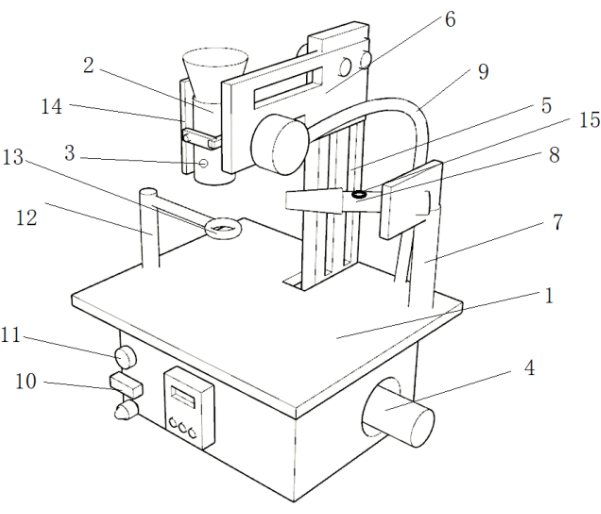
Figure 1: Mechanical drawing. The figure shows 1-base, 2-housing, 3-incoming button, 4-propulsion motor, 5-vertical axis, 6-horizontal axis, 7-ignition support shaft, 8-igniter, 9-wire, 10-main switch, 11-speed control button, 12-positioning rod shaft, 13-positioning ring, 14-scale, 15-ignition button. Please click here to view a larger version of this figure.
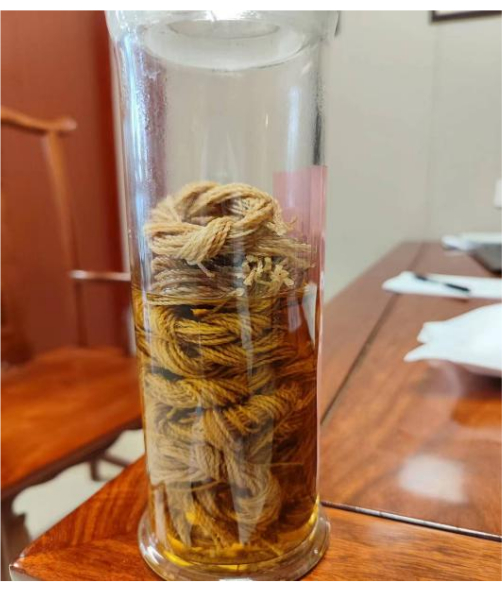
Figure 2: Ramie thread (multiple bundles) soaked in medicinal liquor. The ramie thread in the medicinal liquor for at least 10 days. Please click here to view a larger version of this figure.
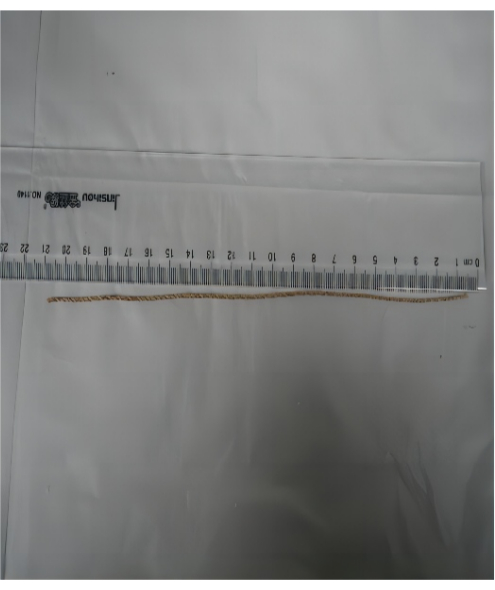
Figure 3: Single drug line diagram. The length of the medicinal thread is approximately 21 cm. Please click here to view a larger version of this figure.
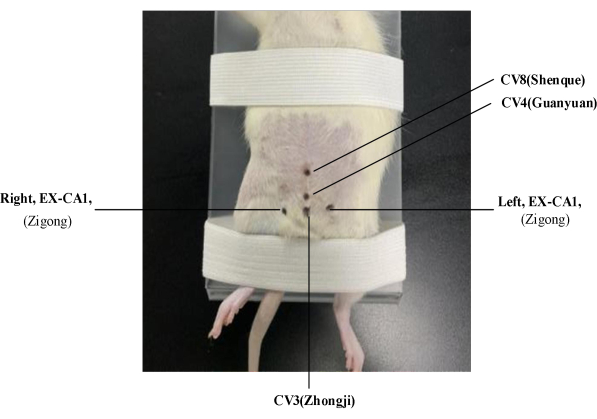
Figure 4: Fixing the rats on a transparent acrylic board using high elastic rubber bands and marking the moxibustion acupoints. The acupoints used in this study are Shen que, Guan yuan, Zhong ji, the left uterine acupoint (left, EX-CA1), and the right uterine acupoint (Right, EX-CA1). Please click here to view a larger version of this figure.
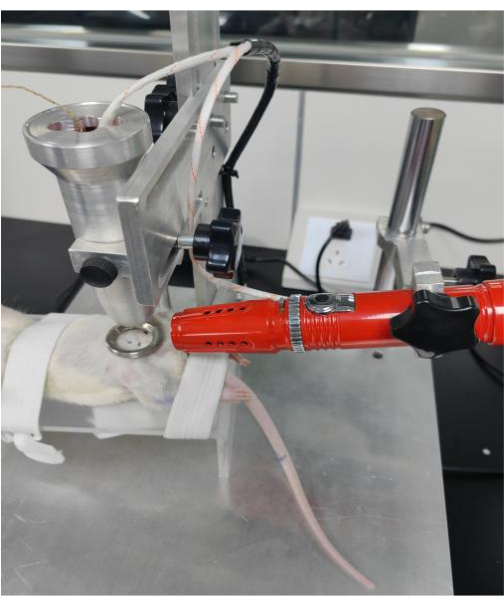
Figure 5: Positioning the rats. The rats are adjusted so that the acupoints that require moxibustion are located in the center of the positioning circle. Please click here to view a larger version of this figure.
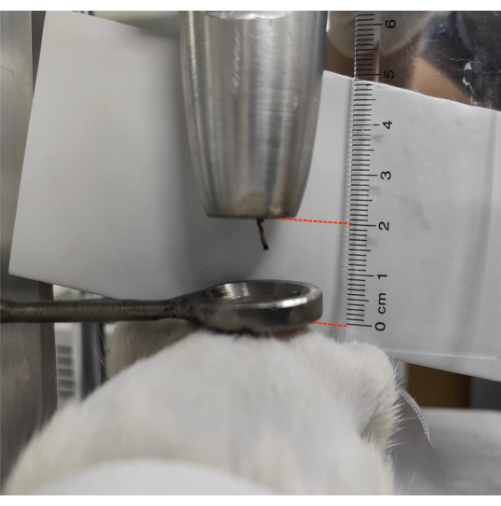
Figure 6: Distance between the drug line device and the positioning ring. The distance from the drug line device shell's bottom to the positioning ring's bottom is 2 cm. Please click here to view a larger version of this figure.
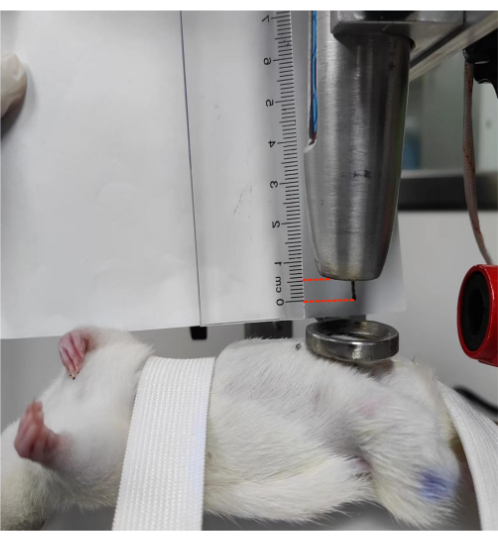
Figure 7: Exposing the medicinal line. Press the feed button to expose the medication line 0.5 cm from the shell. Please click here to view a larger version of this figure.
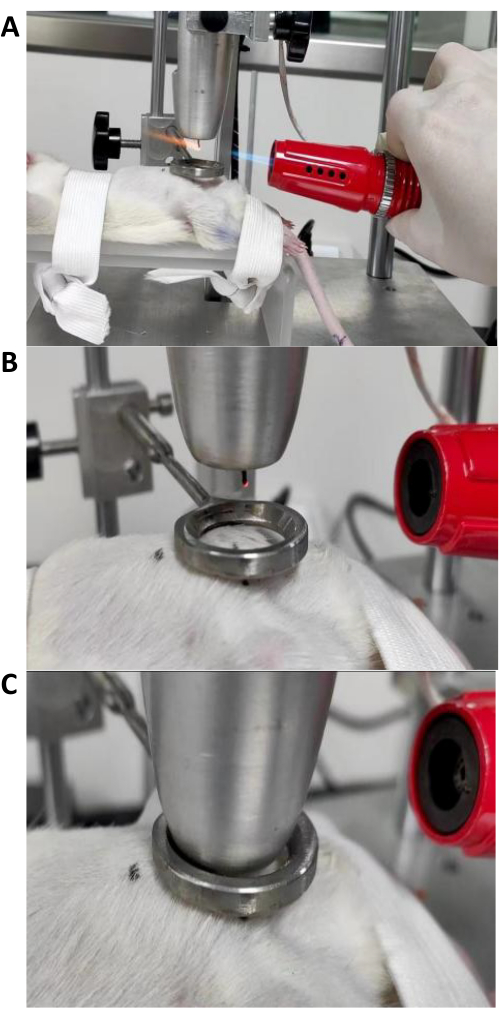
Figure 8: Instrument moxibustion process. (A) Pressing the ignition button. (B) Waiting for the flame to turn into bead fire. (C) The instrument automatically performs moxibustion of the acupoints twice. Please click here to view a larger version of this figure.
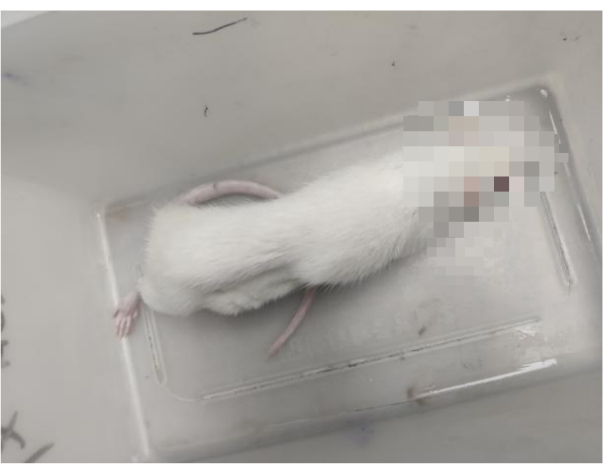
Figure 9: Pain reactions in the rat after oxytocin injection. The pain reactions include abdominal muscle contraction and hind limb extension in rats after oxytocin injection. Please click here to view a larger version of this figure.
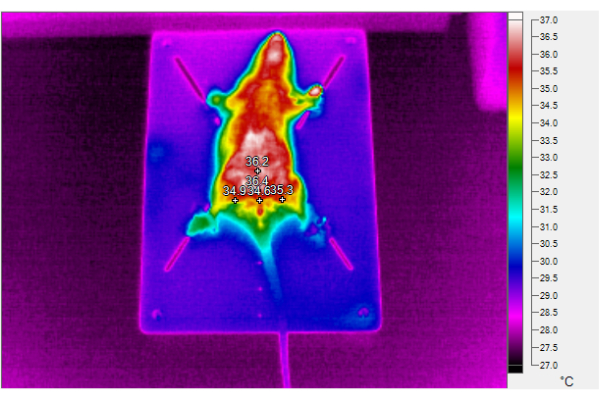
Figure 10: Infrared thermal imaging. The infrared thermal images are exported using the thermal imaging software. Please click here to view a larger version of this figure.
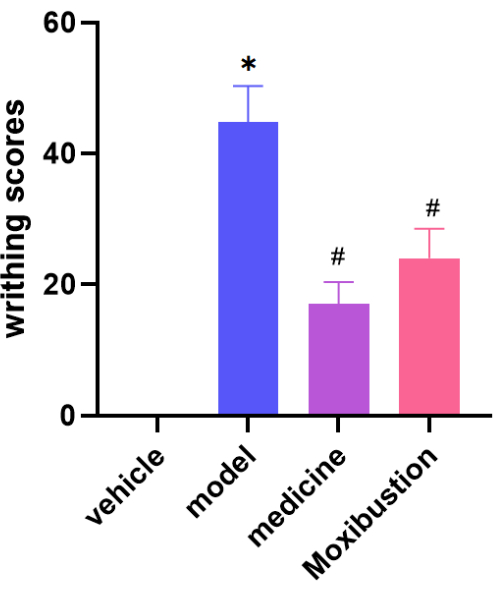
Figure 11: The writhing score of each group. Compared with the vehicle group (*p < 0.05). Compared with the model group (#p < 0.05). Please click here to view a larger version of this figure.
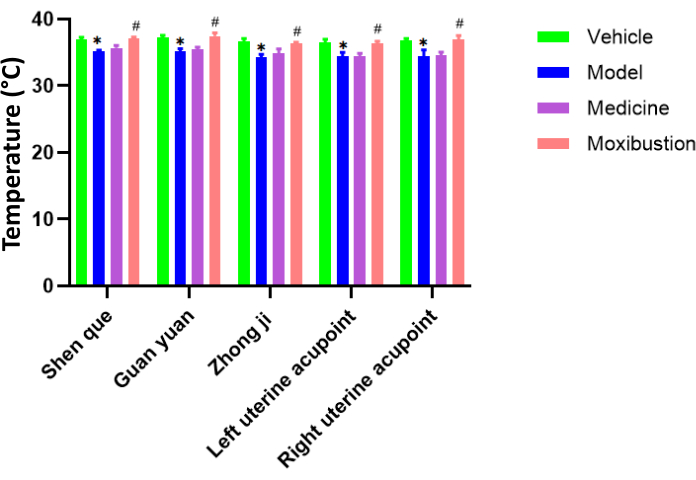
Figure 12: Infrared thermal imaging temperatures of each group. Compared with the vehicle group (*p < 0.05). Compared with the model group (#p < 0.05). Please click here to view a larger version of this figure.
Supplementary Figure 1: The control buttons of the moxibustion simulator. Please click here to download this File.
Supplementary Figure 2: Comparison between the device group and manual moxibustion operations group. Please click here to download this File.
Supplementary Figure 3: Impact of ignition on the abdominal skin temperature. Abdominal skin temperature before and at ignition using Shenque acupoint as the measurement point. Please click here to download this File.
Discussion
Loading...
$$\rightleftharpoonup{xx}$$
$$\longleftharp{xx}$$,
$$\longrightharp{xx}$$,
As an experiential manual treatment method, Zhuang medicine thread moxibustion is divided into igniting Zhuang medicine thread, waiting for the formation of bead fire, and moxibustion contact with the skin. The key factor in the process of Zhuang medicine thread moxibustion operation is the amount of moxibustion stimulation, which is closely related to the intensity, frequency, and heat and has a direct impact on the biological effects of Zhuang medicine thread moxibustion. How to quantitatively apply the stimulation amount of moxibustion to the basic experimental research of Zhuang medicine line moxibustion is an urgent problem that needs to be solved, related to experimental results' reliability, stability, and repeatability. Therefore, this article designs a Zhuang medicine line moxibustion simulator that maintains constant force, heat, and frequency. To compare the differences between manual moxibustion and Zhuang medicine thread moxibustion simulation device, we tested the uterine surface projection temperature of the model group, manual moxibustion group, and Zhuang medicine line moxibustion simulation device group. The results showed that the body surface projection temperature of the manual and device moxibustion groups was higher than that of the model group (p < 0.05). There was no significant difference in body surface projection temperature between the manual and device moxibustion groups (p > 0.05). However, from comparing the standard deviations between the two groups, it can be seen that the standard deviation of the device group is relatively small, indicating strong stability. The standard deviation of the manual moxibustion group is relatively large, indicating significant fluctuations in manual moxibustion operations (Supplementary Figure 2). At the same time, to compare whether the sudden increase in temperature during ignition had an impact on rats, we measured the abdominal skin before and at the ignition of the device group (using Shenque acupoint as the measurement point), and the results showed that the ignition moment did not have an impact on the abdominal skin temperature (Supplementary Figure 3).
Due to the susceptibility to wind interference while igniting the medicinal line, operating the Zhuang Medicine Line Moxibustion Simulator in a sheltered environment is advisable. After the medicinal thread is ignited, there are generally four types of heat conditions - open fire, strip fire, bead fire, and radial fire. The best effect is when the thread is in a "bead fire" shape, and it is important to avoid using open fire for moxibustion16. The time for the formation of bead fire varies after igniting different thicknesses of medicinal lines. Therefore, when replacing different thicknesses of medicinal lines, it is necessary to repeatedly test the formation time of bead fire, set a delay time on the instrument, and then perform moxibustion. The higher the number of times moxibustion is performed on the same acupoint simultaneously, the greater the stimulation. Therefore, it is necessary to choose the appropriate frequency of moxibustion according to experimental needs.
This experiment constructed a model of dysmenorrhea rats with cold coagulation syndrome. Through twisting experiments and the results of uterine surface projection temperature, it was found that Zhuang medicine thread moxibustion can effectively improve the pain response of dysmenorrhea rats with cold coagulation syndrome and increase their uterine surface projection temperature, suggesting that Zhuang medicine thread moxibustion positively improve the pain symptoms formed by dysmenorrhea with cold coagulation syndrome. Clinical studies have shown that pre-menstrual therapy at Shenque, Guanyuan, Zhongji, and uterine acupoints can effectively treat dysmenorrhea caused by coagulation and blood stasis. They have the effects of consolidating the foundation and nourishing the energy, tonifying the lower energizer, and dredging local qi and blood. Acupoints are stimulated by Zhuang medicine thread burning and moxibustion, combining the combined effects of warm heat conduction, acupoints, and medicinal liquor to achieve the regulation of qi and blood, promoting blood circulation and resolving blood stasis, and warming and dispersing cold, which can significantly improve the symptoms of dysmenorrhea.
This experiment still has certain limitations. Due to technological limitations, the formation nodes of bead fires are controlled through time delay in environments with temperature, humidity, and no wind. The next step is to optimize the instrument further and use the image recognition function to control the nodes where bead fires occur more accurately. In addition, due to the inability of the human-computer interaction panel to display detailed parameters, the instrument cannot visually display information such as frequency and temperature. In the future, the human-computer interaction panel of the instrument will be enriched to make its operation more intelligent.
Disclosures
Loading...
$$\rightleftharpoonup{xx}$$
$$\longleftharp{xx}$$,
$$\longrightharp{xx}$$,
The authors have nothing to disclose.
Acknowledgements
Loading...
$$\rightleftharpoonup{xx}$$
$$\longleftharp{xx}$$,
$$\longrightharp{xx}$$,
We thank the support and assistance from the Zhuang Yao Medical Research Laboratory of Guangxi International Zhuang Medicine Hospital. This experiment was supported by the National Natural Science Foundation of China(82360982), the Doctoral Innovation Program (NO.YCBZ2023151) and Zhuang Medicine, Key Disciplines of Traditional Chinese Medicine in Guangxi (NO.GZXK-Z-20-60).
Materials
| Name | Company | Catalog Number | Comments |
|---|---|---|---|
| Estradiol Benzoate Injection | Shanghai Quanyu Biotechnology Animal Pharmaceutical Co., Ltd. | N/A | |
| Ice maker | Guoyi | GYXH-155 | |
| Infrared thermal imager | FLUKE | Ti32 | |
| Oxytocin Injection | Sichuan Jinke Pharmaceutical Co., Ltd. | N/A | |
| Ramie thread | Guangxi Nanning Shuqin Trading Co., Ltd. | N/A | |
| Zhuang Pharmaceutical Line Moxibustion Simulator | In-house |
References
Loading...
$$\rightleftharpoonup{xx}$$
$$\longleftharp{xx}$$,
$$\longrightharp{xx}$$,
- Effect of Zhuang medicine medicated thread moxibustion on proteomics in serum of postherpetic neuralgia patient with Herpes zoster. Pakistan Journal of Pharmaceutical Sciences. 30 (3), 1063-1067 (2017).">Gang, F., Pan, C., Haicheng, W., Hongrui, Z., Jiang, Z., Chen, L. Effect of Zhuang medicine medicated thread moxibustion on proteomics in serum of postherpetic neuralgia patient with Herpes zoster. Pakistan Journal of Pharmaceutical Sciences. 30 (3), 1063-1067 (2017).
- Treatment of Psoriasis Vulgaris with medicated thread moxibustion of Zhuang medicine: A multicenter randomized, parallel controlled trial. Chinese Journal of Integrative Medicine. 28 (3), 208-214 (2022).">Pang, Y. Z., et al. Treatment of Psoriasis Vulgaris with medicated thread moxibustion of Zhuang medicine: A multicenter randomized, parallel controlled trial. Chinese Journal of Integrative Medicine. 28 (3), 208-214 (2022).
- Treatment of insomnia in suboptimal health status with Zhuang medicine herbal-thread moxibustion: A randomized clinical trial. World Journal of Acupuncture-Moxibustion. 32 (4), 336-341 (2022).">Fan, X. -T., Shen, X. -S., Lin, C. Treatment of insomnia in suboptimal health status with Zhuang medicine herbal-thread moxibustion: A randomized clinical trial. World Journal of Acupuncture-Moxibustion. 32 (4), 336-341 (2022).
- Therapeutic effect of Zhuang medicine medicated thread moxibustion on asthma of lung deficiency type. Zhongguo Zhen Jiu. 25 (3), 181-183 (2005).">Li, G. Therapeutic effect of Zhuang medicine medicated thread moxibustion on asthma of lung deficiency type. Zhongguo Zhen Jiu. 25 (3), 181-183 (2005).
- Prevalence, risk factors, and management practices of primary dysmenorrhea among young females. BMC Womens Health. 21 (1), 392(2021).">Karout, S., Soubra, L., Rahme, D., Karout, L., Khojah, H. M. J., Itani, R. Prevalence, risk factors, and management practices of primary dysmenorrhea among young females. BMC Womens Health. 21 (1), 392(2021).
- Bleeding out the quality-adjusted life years: evaluating the burden of primary dysmenorrhea using time trade-off and willingness-to-pay methods. Pain. 158 (11), 2259-2267 (2017).">Rencz, F., et al. Bleeding out the quality-adjusted life years: evaluating the burden of primary dysmenorrhea using time trade-off and willingness-to-pay methods. Pain. 158 (11), 2259-2267 (2017).
- Cyclooxygenase-2 specific inhibitors in the treatment of dysmenorrhea. Journal of Pediatric and Adolescent Gynecology. 17 (2), 75-79 (2004).">Harel, Z. Cyclooxygenase-2 specific inhibitors in the treatment of dysmenorrhea. Journal of Pediatric and Adolescent Gynecology. 17 (2), 75-79 (2004).
- Dysmenorrhea in adolescents and young adults: from pathophysiology to pharmacological treatments and management strategies. Expert Opinion on Pharmacotherapy. 9 (15), 2661-2672 (2008).">Harel, Z. Dysmenorrhea in adolescents and young adults: from pathophysiology to pharmacological treatments and management strategies. Expert Opinion on Pharmacotherapy. 9 (15), 2661-2672 (2008).
- Protein expression profiling of rat uteruses with primary dysmenorrhea syndrome. Archives of Gynecology and Obstetrics. 305 (1), 139-147 (2022).">Xie, Y., Qian, J., Wu, M. Protein expression profiling of rat uteruses with primary dysmenorrhea syndrome. Archives of Gynecology and Obstetrics. 305 (1), 139-147 (2022).
- Mechanisms of Wenjing Huayu Zhitong therapy for primary dysmenorrhea with cold coagulation and blood stasis syndrome based on MAPK/ERK signaling pathway. Chinese Journal of Experimental Traditional Medical Formulae. 27 (17), 66-74 (2021).">Zhai, F. -T., Wang, D. -M., Wang, D. -D., Cao, W. -P., Ma, Q. Mechanisms of Wenjing Huayu Zhitong therapy for primary dysmenorrhea with cold coagulation and blood stasis syndrome based on MAPK/ERK signaling pathway. Chinese Journal of Experimental Traditional Medical Formulae. 27 (17), 66-74 (2021).
- Clinical efficacy observation on treatment of primary dysmenorrhea with ginger-partitioned moxibustion at Zigong (EX-CA 1). Journal of Acupuncture and Tuina Science. 15 (06), 446-450 (2017).">Wu, S. -W. Clinical efficacy observation on treatment of primary dysmenorrhea with ginger-partitioned moxibustion at Zigong (EX-CA 1). Journal of Acupuncture and Tuina Science. 15 (06), 446-450 (2017).
- Clinical study on the treatment of primary dysmenorrhea with Baixiao Moxibustion at Guanyuan and Shenque acupoints and acupuncture at Ciliao acupoints with Haohuo acupuncture. Journal of Heibei TCM and Pharmacology. 35 (02), 29-32 (2020).">Haiyong, L., Jin, Z., Shuang, Y., Shujuan, W., Xiaoyu, Z., Haixia, F. Clinical study on the treatment of primary dysmenorrhea with Baixiao Moxibustion at Guanyuan and Shenque acupoints and acupuncture at Ciliao acupoints with Haohuo acupuncture. Journal of Heibei TCM and Pharmacology. 35 (02), 29-32 (2020).
- Clinical study on warming- needle moxibustion combined with Huazheng Zhitong Tang for primary dysmenorrhea of cold-dampness congealing and stagnation type. New Chinese Medicine. 54 (07), 184-187 (2022).">Xue, L., Miao, Y. Clinical study on warming- needle moxibustion combined with Huazheng Zhitong Tang for primary dysmenorrhea of cold-dampness congealing and stagnation type. New Chinese Medicine. 54 (07), 184-187 (2022).
- An integrated study of metabolomics and transcriptomics to reveal the anti-primary dysmenorrhea mechanism of Akebiae Fructus. Journal of Ethnopharmacology. 270, 113763(2021).">Ma, B., et al. An integrated study of metabolomics and transcriptomics to reveal the anti-primary dysmenorrhea mechanism of Akebiae Fructus. Journal of Ethnopharmacology. 270, 113763(2021).
- In vivo studies on spinal opiate receptor systems mediating antinociception. II. Pharmacological profiles suggesting a differential association of mu, delta and kappa receptors with visceral chemical and cutaneous thermal stimuli in the rat. Journal of Pharmacology and Experimental Therapeutics. 228 (1), 1-12 (1984).">Schmauss, C., Yaksh, T. L. In vivo studies on spinal opiate receptor systems mediating antinociception. II. Pharmacological profiles suggesting a differential association of mu, delta and kappa receptors with visceral chemical and cutaneous thermal stimuli in the rat. Journal of Pharmacology and Experimental Therapeutics. 228 (1), 1-12 (1984).
- Discussion on some issues of medicated thread moxibustion of Zhuang ethnic group. Zhongguo Zhen Jiu. 36 (10), 1104-1106 (2016).">Chen, P., Lin, C. Discussion on some issues of medicated thread moxibustion of Zhuang ethnic group. Zhongguo Zhen Jiu. 36 (10), 1104-1106 (2016).
Reprints and Permissions
Request permission to reuse the text or figures of this JoVE article
Request Permission