Here, we describe several protocols aiming at an integrated valorization of Gracilaria gracilis: wild species harvesting, in-house growth, and extraction of bioactive ingredients. The extracts' antioxidant, antimicrobial, and cytotoxic effects are evaluated, along with the nutritional and stability assessment of food enriched with whole seaweed biomass and pigments.
Method Article
Valorization of the Red Seaweed Gracilaria gracilis Through a Biorefinery Approach
In This Article
Summary
Abstract
The interest in seaweeds as an abundant feedstock to obtain valuable and multitarget bioactive ingredients is continuously growing. In this work, we explore the potential of Gracilaria gracilis, an edible red seaweed cultivated worldwide for its commercial interest as a source of agar and other ingredients for cosmetic, pharmacological, food, and feed applications.
G. gracilis growth conditions were optimized through vegetative propagation and sporulation while manipulating the physicochemical conditions to achieve a large biomass stock. Green extraction methodologies with ethanol and water were performed over the seaweed biomass. The bioactive potential of extracts was assessed through a set of in vitro assays concerning their cytotoxicity, antioxidant, and antimicrobial properties. Additionally, dried seaweed biomass was incorporated into pasta formulations to increase food's nutritional value. Pigments extracted from G. gracilis have also been incorporated into yogurt as a natural colorant, and their stability was evaluated. Both products were submitted to the appreciation of a semi-trained sensorial panel aiming to achieve the best final formulation before reaching the market.
Results support the versatility of G. gracilis whether it is applied as a whole biomass, extracts and/or pigments. Through implementing several optimized protocols, this work allows the development of products with the potential to profit the food, cosmetic, and aquaculture markets, promoting environmental sustainability and a blue circular economy.
Moreover, and in line with a biorefinery approach, the residual seaweed biomass will be used as biostimulant for plant growth or converted to carbon materials to be used in water purification of the in-house aquaculture systems of MARE-Polytechnic of Leiria, Portugal.
Introduction
Seaweeds can be regarded as an interesting natural raw material to be profited by the pharmaceutical, food, feed, and environmental sectors. They biosynthesize a panoply of molecules, many not found in terrestrial organisms, with relevant biological properties1,2. However, seaweed-optimized cultivation protocols need to be implemented to ensure a large biomass stock.
Cultivation methods must always consider the nature of the seaweed thalli and overall morphology. Gracilaria gracilis is a clonal taxon, meaning the attachment organ produces multiple vegetative axes. Propagation by fragmentation (vegetative reproduction) is thus achieved, as each of these axes is fully able to adopt an independent life from the main thallus3. Clonal taxa can be successfully integrated with simple and fast one-step cultivation methodologies, as large amounts of biomass are obtained by splitting the thallus into small fragments that quickly regenerate and grow into new, genetically identical individuals. Both haplontic and diplontic thalli may be used in this process. Although the genus exhibits a complex haplo-diplontic isomorphic triphasic life cycle, sporulation is rarely necessary except when genetic renewal of the stocks is required to achieve improved crops. In this case, both tetraspores (haplontic spores formed by meiosis) and carpospores (diplontic spores formed by mitosis) give rise to macroscopic thalli that can then be grown and propagated by vegetative reproduction4. Growth cycles are dictated by environmental conditions and the physiological state of the individuals, among other biological factors such as the emergence of epiphytes and the adhesion of other organisms. Therefore, optimizing growing conditions is crucial to ensure high productivity and produce good quality biomass5.
The extraction of bioactive compounds from seaweed, including G. gracilis, can be achieved through various methods6,7. The choice of the extraction method depends on the specific compounds of interest, the target application, and the characteristics of the seaweed. In this study, we focused on solvent extraction, which involves using green solvents, such as water or ethanol, to dissolve and extract bioactive compounds from the seaweed biomass. The extraction can be carried out through maceration in a versatile and effective way and can be used for a wide range of compounds. It is a simple and widely used method involving soaking biomass in a solvent for an extended period, typically at room or slightly elevated temperatures. The solvent is stirred to enhance the extraction process. After the desired extraction time, the solvent is separated from the solid material by filtration or centrifugation.
Water is a commonly used solvent in food applications due to its safety, availability, and compatibility with a wide range of food products. Water extraction is suitable for polar compounds such as polysaccharides, peptides, and certain phenolics. However, it may not effectively extract non-polar compounds. Ethanol is also a widely used solvent in food applications and can be effective for extracting a variety of bioactive molecules, including phenolic compounds, flavonoids, and certain pigments. Ethanol is generally recognized as safe for use in food and can be easily evaporated, leaving behind the extracted compounds. It is worth noting that the choice of extraction method should consider factors such as efficiency, selectivity, cost-effectiveness, and environmental impact. The optimization of extraction parameters, such as solvent concentration, extraction time, temperature, and pressure, is crucial to achieving optimal yields of bioactive compounds from G. gracilis or other seaweeds.
Seaweeds have been found to exhibit antimicrobial activity against a wide range of microorganisms, including bacteria, fungi, and viruses8. This activity is attributed to bioactive components, including phenolics, polysaccharides, peptides, and fatty acids. Several studies have demonstrated their efficacy against pathogens such as Escherichia coli, Staphylococcus aureus, Salmonella sp., and Pseudomonas aeruginosa, among others9. The antimicrobial activity of seaweeds is attributed to the presence of bioactive compounds that can interfere with microbial cell walls, membranes, enzymes, and signaling pathways10. These compounds may disrupt microbial growth, inhibit biofilm formation, and modulate immune responses.
Red seaweeds, also known as rhodophytes, are a group of algae that can exhibit antimicrobial activity against a variety of microorganisms. Within this group, G. gracilis contains various bioactive compounds that may contribute to its reported antimicrobial activity. While the specific molecules can vary, the common classes that have been reported in G. gracilis and may possess antimicrobial properties are polysaccharides, phenolics, terpenoids, and pigments11. However, it is important to note that the presence and amounts of these components can vary depending on factors such as the location of seaweed collection, seasonality, physiological condition of the thalli, and environmental conditions. Therefore, the specific class and concentration of antimicrobial compounds in G. gracilis may vary accordingly.
G. gracilis has also been found to hold antioxidant properties, containing various phenolic compounds, which have been shown to scavenge free radicals and reduce oxidative stress12. Antioxidants help to protect cells from damage caused by reactive oxygen species and have potential health benefits. Antioxidant capacity can be evaluated directly through different methods, including the 2,2-diphenyl-1-picrylhydrazyl (DPPH) free radical scavenging activity and, indirectly, through the quantification of total polyphenolic content (TPC)13.
Even though an ingredient is reported to have a prominent bioactivity, its cytotoxicity assessment is indispensable in evaluating natural and synthetic substances to be used in contact with living cells or tissues. There are several methods for measuring cytotoxicity, each one with advantages and limitations. Overall, they offer a range of options to evaluate the harmful effects of many substances on cells and, at the same time, to investigate the mechanisms of cell damage and death14.
In this work, we use the 3-(4,5-dimethylthiazol-2-yl)-2,5-diphenyltetrazolium bromide (MTT) assay, a colorimetric method introduced by Mosmann (1983)15. This method measures the reduction of tetrazolium salts to a purple formazan product by metabolically active cells. The higher the amount of formazan crystals, the higher the number of viable cells, thus providing an indirect measure of cytotoxicity14. Since in this work, G. gracilis water and ethanol extracts are intended to be incorporated into dermo-cosmetic formulations, the in vitro cytotoxicity evaluation is performed in a keratinocyte (HaCaT) cell line.
Concerning the food application, seaweeds are generally low in calories and nutritionally rich in dietary fibers, essential elements and amino acids, polysaccharides, polyunsaturated fatty acids, polyphenols, and vitamins2,16. G. gracilis is no exception, having an interesting nutritional value. Freitas et al. (2021)4 found that cultivated G. gracilis had higher levels of protein and vitamin C and maintained the level of total lipids compared to wild seaweed. This may represent an economic and environmental advantage, as nutritionally speaking, production is preferable to the exploitation of wild resources. In addition, consumers are increasingly concerned about the type of food they eat, so it is important to introduce new ingredients for food enrichment and use new resources to obtain extracts that can add value to a product and claim a "clean label." Besides, the current market is very competitive, requiring the development of new products and innovative strategies to differentiate manufacturers from their competitors17.
The enrichment of products with poor nutritional value, such as pasta, with marine resources, including seaweed, is a strategy to introduce this resource as a new food and a market differentiation strategy through a product with distinct nutritional value. On the other hand, G. gracilis is a source of natural red pigments such as phycobiliproteins18, having high potential for applications in the food industry. This seaweed has shown high interest in several areas, and its application can be made using the whole seaweed, extracts and/or the remaining biomass. In this work, we demonstrate some examples of such applications.
Protocol
1. Biomass harvesting and preparation
- Harvest the specimens of G. gracilis during low tide and quickly transport them to the laboratory in dark, cooled boxes to avoid drying, light, and air exposure.
- In the laboratory, wash each thallus with running seawater and clean thoroughly to remove debris, necrotic parts, epiphytes, and other organisms from the surface.
- Keep the wild biomass in constantly aerated seawater (31-35 psu) in a climatic room (20 ± 1 °C) with low irradiance provided by daylight cool white and fluorescent lamps and photoperiod set at 16:08 (light: dark) for 7 days. During this period, do not supply any nutrient media; this allows the seaweed to slowly adjust to the new indoor conditions.
2. Stock maintenance
- Following the acclimatization period, cut healthy tips of seaweed thalli with a sterile blade. Following Redmond et al. (2014)19 and under sterile conditions, drag each tip through an agar gel previously prepared in Petri dishes (1.0% bacteriological agar, in 1:1 distilled water/seawater ratio) to remove any remaining contaminants. Perform the agar drag three times for each tip and always drag the tip through unused portions of the agar gel.
- Acid wash glassware in a hydrochloric acid solution (HCl, 15%) and thoroughly rinse with distilled water. Sterilize all tools, glassware, agar, seawater, and distilled water used in the cleaning process by autoclave (121 °C, 15 min).
CAUTION: See the safety data sheet of HCl delivered by the supplier. - Tips grow in sterilized seawater at 35 psu, supplemented with Von Stosch Enriched solution (VSE) modified for red seaweeds, according to Redmond et al. (2014)19. Add germanium dioxide (GeO2) to the medium (1 mL/L) to prevent the growth of epiphytic diatoms.
CAUTION: See the safety data sheet of GeO2 delivered by the supplier.
NOTE: Tips that show loss of pigmentation, as observed by partial or total discoloration, are under stress or are already dead and ought to be discarded.
3. Cultivation and scale-up
- After the acclimatization period, randomly distribute about 8-10 healthy tips into 250 mL flat-bottom flasks in a climatic room set at 20 ± 1 °C with the white cool light of 20 ± 0.5 µmol photons m-2 s-1 (1500 lux), a photoperiod set at 16 h: 8 h (light: dark), and sterile seawater enriched with VSE culture media renewed every week.
- Perform weekly weight measurements, avoiding straining the thalli excessively20. For this, carefully remove the tips from the culture medium, gently rinse, and weigh the milligrams on a laboratory scale.
NOTE: This procedure can be performed along with the culture media weekly renewal. - Thalli may grow in these flasks up to a density of 2 g/L. At this point, perform a recipient scale-up (250 mL, 1 L, and 5 L). Transfer the cultivation to outdoor open white containers of 50 L and larger when the volume reaches 5 L.
- Calculate relative growth rate (RGR) according to Patarra et al. (2017)21 :
RGR (% fw/day) = ([Ln (fw) - Ln (iw)]/t) x 100
where iw and fw are the initial and final fresh weight, respectively, expressed in grams, and t is the time in days.
NOTE: Under this laboratory setup, RGR reaches values up to 21% per day. Biomass harvest can be performed at any time. Biomass must be quickly processed to prevent degradation by either oven-drying, freeze-drying, or simply stored frozen (-20 °C), depending on the intended use. The dried biomass can be preserved at room temperature (RT) or stored frozen as well.
4. Extraction procedure
NOTE: To assess the in vitro cytotoxicity, antioxidant, and antimicrobial properties of G. gracils extracts, its preparation considers two different parameters: the extraction temperature and the type of solvent.
- To carry out the extractions, oven-dry the G. gracilis biomass and grind the biomass (e.g., in a household coffee grinder) until the powder passes through a 200 µm sieve.
- Weigh the dried biomass (10 g) and dissolve it in 100 mL of solvent (absolute ethanol or sterile water).
- Stir in a vessel protected from light for 30 min.
- Perform sequential ethanol > water and water > ethanol extractions at RT, 40 °C, and 70 °C.
- For each temperature, perform the extractions with ethanol and water separately twice.
- Separate the liquid extracts from the remaining biomass by filtration through filter paper (Whatman No.1), followed by centrifugation at 8000 x g for 10 min at RT.
- Re-use the remaining algal biomass for further extraction with the other solvent. If a sample was firstly extracted with ethanol, extract it with water next, and vice-versa.
- Freeze-dry the aqueous extracts and evaporate the ethanol extracts in a rotary evaporator at 40 °C.
- Store the dried extracts at 4 °C.
- Dissolve the extracts at a concentration of 50 mg/mL (antimicrobial assays) or 10 mg/mL (antioxidant assays). Dissolve the aqueous extracts in sterile water and the ethanolic extracts in absolute ethanol.
5. Antimicrobial activity
NOTE: The ethanolic and aqueous extracts should be tested individually against Bacillus subtilis subsp. spizizenii (DSM 347), Escherichia coli (DSM 5922) and Listonella anguillarum (DSM 21597). Antimicrobial testing must be performed according to the recommendations of the National Committee for Clinical Laboratory Standards (NCCLS, 2012)22. All cultures were obtained from the German Collection of Microorganisms and Cell Cultures (DSMZ). L. anguillarum was grown on tryptic soy broth (TSB) or tryptic soy agar (TSA) supplemented with 1% sodium chloride (NaCl). The remaining two strains were grown on LB medium (VWR Chemicals). Bacillus subtilis subsp. spizizenii (DSM 347) and Listonella anguillarum (DSM 21597) cultures were incubated at 30 °C, while Escherichia coli (DSM 5922) was incubated at 37 °C, according to the supplier's instructions. The broth microdilution method can be used for the determination of antimicrobial activity in a liquid media, and this should be carried out on a microscale, allowing the antimicrobial potential to be determined quickly and efficiently. This low-cost method allows results to be obtained in just 24 h, being therefore suitable for determining, at an early stage, the best extraction conditions that allow, for a given microbial strain, to obtain results in terms of growth inhibitory action. However, the methodology requires the use of sterile microplates with a lid specific for microbial growth, as well as the availability of a microplate reader for the 600 nm wavelength.
- Perform the broth microdilution tests using non-treated and round-bottom 96-well microplates with 170 µL of Muller-Hinton Broth (MHB), inoculated with 10 µL of standardized inoculum (at 0.5 McFarland standard) and 20 µL of each extract (50 mg/mL).
- Incubate the plates for 24 h at the optimal temperature for each strain.
- Detect the antimicrobial activity by the reduction of the visible turbidity measured by recording the optical density (OD 600) in a microplate spectrophotometer, at 0 h and 24 h.
- Express the results as a percentage of inhibition:

where Abs. ext is the difference in the absorbance measured, between 0 h and 24 h, in the wells that contain bacterial strain growing in the presence of the extract, and Abs refers to the same measure in wells that contain the bacterial strain and solvent. - In this method, include control reactions, with wells containing only culture medium that will be the negative control, but also wells with medium inoculated with the standard strain added to solvent (ethanol or water) and medium with the bacterial strain and the positive control antibiotic (chloramphenicol).
6. Antioxidant activity and quantification of total polyphenols
- Total polyphenolic content
NOTE: Total polyphenolic content (TPC) is carried out using the Folin-Ciocalteu method23 and adapted to micro-scale.- Add to each well of a 96-well microplate, protected from light, 158 µL of ultrapure water, 2 µL of the sample, and 10 µL of Folin-Ciocalteu reagent.
CAUTION: See the safety data sheet of the Folin-Ciocalteu reagent delivered by the supplier. - After 2 min, add 30 µL of Na2CO3 (20%).
- After incubation in the dark at RT for 1 h, measure the samples spectrophotometrically at 755 nm.
- Use gallic acid (which allows the calibration curve to be plotted) or ultrapure water (2 µL) as controls.
- Express the results as gallic acid equivalents (mg GAE/g extract).
- Add to each well of a 96-well microplate, protected from light, 158 µL of ultrapure water, 2 µL of the sample, and 10 µL of Folin-Ciocalteu reagent.
- 2,2 diphenyl-1-picrylhydrazyl (DPPH) radical scavenging activity
NOTE: The antioxidant activity of the extracts is evaluated as described by Duan et al. (2006)24, adapted to microscale- In a 96-well microplate protected from light, place 2 µL of each sample (at a concentration of 10 mg/mL) and 198 µL of DPPH dissolved in absolute ethanol (0.1 mM).
CAUTION: See the safety data sheet of DPPH delivered by the supplier. - Run the reaction for 30 min at RT in the dark. Measure the absorbance at 517 nm in a microplate spectrophotometer.
- Perform a control reaction with 2 µL of absolute ethanol/distilled water and 198 µL of DPPH solution. Perform a blank measurement with 2 µL of extract and 198 µL of absolute ethanol.
- Express the results as the percentage of DPPH inhibition using the following equation:

where As is the absorbance of the algal extract, Ab is the absorbance of the blank samples and Ac is the absorbance of the control.
- In a 96-well microplate protected from light, place 2 µL of each sample (at a concentration of 10 mg/mL) and 198 µL of DPPH dissolved in absolute ethanol (0.1 mM).
7. Cytotoxicity evaluation in epidermal cells
NOTE: The in vitro cytotoxic effect of the aqueous and ethanol extracts of G. gracilis is evaluated in human keratinocytes (HaCaT cells - 300493) through the MTT colorimetric assay as previously described25. Cells were acquired from Cell Lines Services, Germany (CLS) and the method was performed in compliance with institutional guidelines and CLS instructions.
CAUTION: See the safety data sheet of MTT delivered by the supplier)
- Cell culture maintenance
- Culture HaCaT cells in Dulbecco´s Modified Eagle´s high glucose medium (DMEM) supplemented with 10% fetal bovine serum (FBS) and 1% antibiotic/antimycotic solution (amphotericin B, 0.25 mM; penicillin, 60 mM; streptomycin, 100 mM).
- Use trypsin-EDTA to dissociate the cells.
NOTE: The sub-culture of HaCaT cells is accomplished after the cells reach total confluence. - Culture the cells in a chamber at 37 °C with 5% CO2 and 95% humidity.
- Subculture the cells according to biobank instructions whenever cultures reach 80%-85% confluence.
- Cytotoxicity evaluation
- After seeding cells in 96-well plates and incubation overnight, treat HaCaT cells (4 x 10⁴ cells/well) with the dried extracts previously dissolved in DMSO (100 mg/mL). Then, add 2 µL of the extract solution to 198 µL of medium and incubate the plates for 24 h.
- Remove the culture medium and add 100 µL of MTT (0.5 mg/mL) to the cells. Incubate the cells for 30 min in the dark at regular culture conditions mentioned above.
- Remove the MTT solution and solubilize the intracellular formazan crystals with 100 µL of DMSO.
- Measure the absorbance at 570 nm using a microplate reader. Express the results as a percentage of control untreated cells.
8. Food innovation
- New food product: Pasta with seaweed
- Selection of ingredients and pasta formulation
NOTE: The ingredients selection was made in collaboration with a pasta company. The choice of key ingredients (described in section 8.2) was made considering their easy accessibility and compatibility with the existing production lines, using marine resources to obtain pasta with added nutritional value.- After the ingredients' choice, design the formulation following the intended nutritional value (source of fiber, vitamins, and mineral elements, low saturated fats) by analyzing the formulations' theoretical chemical composition using a spreadsheet.
- When the theoretical requirements are met, proceed with the laboratory-scale production as described in step 8.1.2.
- Perform a sensory test with a semi-trained panel (>10 tasters) to validate the need for reformulation or the acceptance of the formulation for the following steps.
NOTE: The panel was previously trained for the tasting of pasta and hedonically evaluated the formulations presented regarding attributes such as flavor, taste, odor, texture, and appearance.
- Pasta production
NOTE: Produce Chifferi pasta samples using a pasta extruder.- In the equipment, mix previously defined portions of rice flour, G. gracilis, and Chlorella vulgaris, and add about 30% of water to the mixture.
- To obtain dry pasta, dry Chifferi at 68 °C for 42 min, followed by 5 h, 30 min at 76 °C, simulating an industrial process.
- Finally, pack and vacuum seal the samples and store them in a dark place at RT until further analysis.
- Nutritional analysis
NOTE: For the nutritional profile analyses, use dried and macerated samples in triplicate.- Crude protein content: Perform total protein assay through the Kjeldahl method, adapted from Duarte et al. (2022)26, following steps 8.1.3.2-8.1.3.6.
- Accurately weigh 1.0 g of sample (or distilled water for the blank assay) and mix with two Kjeldahl tablets and 25 mL of H2SO4 in digestion tubes.
CAUTION: See the safety data sheet of H2SO4 delivered by the supplier. - Perform the digestion of samples in a Kjeldahl digestor at 220 °C for 30 min, followed by 90 min at 400 °C.
- After cooling down to RT, add 80 mL of distilled water and distil the ammonia formed into 30 mL of a 4% H3BO3 solution containing bromocresol green and methyl red. This step takes place under alkaline conditions (distillation with 40% NaOH using a Kjeldahl distiller.
CAUTION: See the safety data sheet of the H3BO3 solution containing bromocresol green, methyl red and 40% NaOH delivered by the supplier. - Titrate the distilled samples with HCl 0.1 M until a change in color to a greyish pink is observed.
- Calculate the crude protein content, represented by the sample's nitrogen content, and express it as g per 100 g using the following equation:

where Vs corresponds to the HCl volume (mL) used in sample titration; Vb corresponds to the volume used in the blank; N corresponds to HCl normality; w corresponds to sample weight (g). - Total fat content: Determine the total fat content using the Folch method, adapted from Folch et al. (1957)27, following steps 8.1.3.8-8.1.3.14.
- Prepare Folch reagent by mixing CHCl3 and MeOH in a proportion of 2:1 (v:v).
CAUTION: See the Safety Data Sheet of the Folch reagent delivered by the supplier. - To test tubes containing 1 g aliquots of samples, add 5 mL of Folch reagent and 0.8 mL of distilled water. Mix in a vortex for 1 min.
- Then, add another 5 mL of Folch reagent and homogenize for 5 min. Add 1.2 mL of 0.8% NaCl solution and homogenize for 2 min.
- Centrifuge the samples at 7000 x g for 10 min. Filter the organic phase (lower phase) through hydrophilic cotton and anhydrous sodium sulfate into a round-bottomed glass flask.
- To avoid sample loss, repeat the steps of addition of 5 mL of CHCl3, homogenization, centrifugation, and filtration under the same conditions.
- Remove the organic solvent from the collected organic phases by low-pressure evaporation and leave in the oven at 105 °C for 4 h. Cool down the samples in a desiccator.
- Calculate the fat content, expressed as g per 100 g, using the following equation:

where W1 is the empty round-bottomed glass flask weight; W2 is the sample's initial weight; W3 is the round-bottomed glass flask with the sample weight. - Crude fiber content: Determine the crude fiber content using a methodology adapted from ISO 6865 (2000)28, following steps 8.1.3.16-8.1.3.22.
- Weigh 1 g of the sample (W0) into a glass crucible with a filter bottom (reference P2) and place it in the fiber analyzer.
- The first step is acid hydrolysis: Add 150 mL of 1.25% H2SO4, preheated, and 2 mL of anti-foaming agent (n-octanol) to the column of each crucible; heat until boiling and keep for 30 min.
- After removal of this solvent, wash three times with deionized water to proceed to the basic hydrolysis. Add 150 mL of 1.25% NaOH, preheated, and 5 mL of anti-foaming agent to the liquid-free column, and perform the same heating procedure as for the acid hydrolysis.
- Finally, make a triple wash with 150 mL of acetone for the cold extraction.
- After this process, carefully remove the crucibles from the system and place them in an oven at 150 °C for 1 h. Record the final weight (W1).
- Place the crucibles in a muffle furnace at 500 °C for 3 h and then record the final weight (W2).
- Calculate the crude fiber content and express the results in percentages using the following equation:
%Crude Fiber = 100 x (W1-W2)/W0 - Fatty acid (FA) profile: Determine the fatty acids profile according to Fernández et al.(2015)29, following steps 8.1.3.24-8.1.3.29.
NOTE: The fatty acids methyl esters (FAMEs) are obtained by direct acid-catalyzed transmethylation of the milled freeze-dried samples. All analyses are done in triplicate. - Add 2 mL of a 2% (v/v) H2SO4 solution in methanol to a 50 mg sample and pour the mixture at 80 °C for 2 h with continuous stirring.
CAUTION: See the safety data sheet of methanol delivered by the supplier. - After cooling to RT, add 1 mL of ultrapure water and 2 mL of n-heptane to each sample, vortex the mixture for 1 min, and centrifuge it for 5 min.
CAUTION: See the safety data sheet of n-heptane delivered by the supplier. - Recover the upper n-heptane phase (organic) containing the FAMEs and transfer it to gas chromatography (GC) vials.
- Analyse in a gas chromatograph equipped with a TR-FAME capillary column (60 m × 0.25 mm ID, 0.25 µm film thickness), an autosampler, and a flame ionization detector (FID).
- Set the injector (splitless mode) at 250 °C and the detector at 280 °C. Set the column´ initial temperature at 75 °C and hold for 1 min. Then raise at 5 °C/min to 170 °C and hold for 10 min. Then raise at 5 °C/min to 190 °C and hold another 10 min. Finally, raise at 2 °C/min to 240 °C and hold for 10 min. Use helium as carrier gas at a flow rate of 1.5 mL/min. Supply air and hydrogen at flow rates of 350 and 35 mL/min, respectively.
- Determine the FA profile by comparing the resulting retention times with a standard and express the results as a percentage of total fat.
- Mineral elements profile: Determine the mineral elements (Ca, P, Mg, Na, K, Fe, Cu, Mn, Zn) analyzed by ICP-OES, following the method adapted from Pinto et al. (2022)30, following steps 8.1.3.31-8.1.3.34.
- Accurately weigh about 0.4 g of each dry sample and add 7.5 mL of HNO3 and 2.5 mL of HCl.
CAUTION: See the safety data sheet of HNO3 and HCl delivered by the supplier. - The digestion follows a two-stage process: Increase the temperature from RT to 90 °C in 30 min (and maintain a further 30 min at this temperature) followed by 60 min at 105 °C.
- Cool the sample solutions, dilute them to 25 mL, and filter and keep them in labeled tubes. In each digestion, perform the same process with a reference material and a blank. Obtain the concentration of the different elements by ICP-OES.
- Express the results in mg per 100 g of fw.
- Carbohydrate content: Calculate the carbohydrate content following steps 8.1.3.36-8.1.3.37.
- Calculate the available carbohydrates (fiber excluded) content by the difference of the previously determined factors per 100 g, using the following equation, according to the Food and Agriculture Organization (FAO; 2003)31

- Express the results in g per 100 g.
- Moisture and ash content: Estimate the moisture and ash contents following steps 8.1.3.39-8.1.3.45.
- Incubate porcelain crucibles for 3 h at 105 °C, cool them in a desiccator and weigh them.
- Weigh 10 g of the sample into the crucible and place it in a drying oven at 105 °C for 3 h cycles until the values from successive weightings do not differ by more than 10 mg.
- Calculate moisture content, expressed as g per 100 g of fw, using the following equation:

where W1 is the weight of the empty crucible, W2 is the weight of the crucible with the fresh sample, and W3 is the weight of the crucible with the dried sample. - After the moisture content assay, place the crucibles with the dried samples in an incinerator at 525 °C for 4 h.
- Repeat this procedure until successive weightings do not differ by more than 1 mg.
- Cool the samples to RT in a desiccator and then weigh them.
- Calculate the ash content, expressed as g per 100 g of fw, using the following equation:

where W1 is the weight of the empty crucible, W2 is the weight of the crucible with fresh sample, W3 is the weight of the crucible with weight. - Energy value: Calculate the energy value following steps 8.1.3.47-8.1.3.48.
- Calculate the energetic value of the samples according to the EU regulation:The provision of food information to consumers (Regulation 1169/2011)32, using the equations:
Energy (kcal/ 100 g) = 4 x (g proteins) + 4 x (g carbohydrates) + 9 x (g fat) + 2 x (g fiber)
Energy (kJ/ 100 g) = 17 x (g proteins) + 17 x (g carbohydrates) + 37 x (g fat) + 8 x (g fiber) - Express the results in kilocalories per 100 g and kilojoules per 100 g.
- Consumer acceptance
- Evaluate consumer acceptance using pasta samples cooked in distilled water for 8 min.
- Perform consumer acceptance test: Evaluate visual appearance, color, texture, odor, sea taste, overall taste, overall evaluation, and purchase intent of the samples.
NOTE: The consumer acceptance test is based on hedonic tests evaluating visual appearance, color, texture, odor, sea taste, overall taste, overall evaluation, and purchase intent on a scale of 1-9, where 1 is a poor evaluation, and 9 is a very good evaluation. - Perform sensory tests in individual sensory booths in a sensory analysis laboratory (with temperature and lighting control). Provide cutlery, napkins, and glass cups of mineral water to clean the palate between samples.
NOTE: Tasters are aged 16-64 from all backgrounds (n > 80).
- Selection of ingredients and pasta formulation
- Yogurt
- Pigment extraction
NOTE: Perform the pigment extraction through the methodology described in Pereira et al. (2020)18.- Prepare the extraction solvent, sodium phosphate buffer at 0.1 M, with sodium phosphate dibasic (0.03 M) and sodium phosphate monobasic (0.07 M). Set the pH at pH 6.8 using NaOH or HCl.
- Weigh 1 g of G. gracilis and add 50 mL of sodium phosphate buffer (pH 6.8). Homogenize for 10 min, followed by 10 min of maceration with mortar and pestle.
- Transfer the solution to a tube and centrifuge for 20 min at 12,298 x g (4 °C).
- Pool the supernatant and slowly add 65% ammonium sulfate. When all the ammonium sulfate is dissolved, cover the solution with an aluminum sheet and leave it to precipitate at 4 °C overnight.
CAUTION: See the safety data sheet of ammonium sulfate delivered by the supplier. - Centrifuge the precipitate for 20 min at 12,298 x g (4 °C). Recover the pellet and dissolve in distilled water (approximately 5 mL).
- Perform dialysis of the extract using a tubing membrane (14 kDa) against water for 24 h, followed by freeze-drying. Store the freeze-dried extract protected from light at 4 °C until use.
- Yogurt preparation
- Prepare natural yogurt by mixing 1 L of pasteurized milk, 120 g of natural yogurt, 20 g of sugar, and 50 g of milk powder in a thermomixer for 5 min, 50 °C, speed 3.
- Place the mixture in the thermomixer jar in an incubator at 37 °C for 12 h.
- Incorporate the extract by mixing it in yogurt at a concentration of 0.21%. Store the samples in individual glass flasks at 4 °C until analysis.
- Store individual portions of yogurt without pigment (control) at 4 °C until analysis.
- Color stability
NOTE: Evaluate the stability of the pigment in the yogurts through color analysis for 12 days. Perform color analysis using a reflectance colorimeter, using a 2-degree standard observer, and a D65 illuminant. The results are presented as CIELab coordinates with L (lightness, black - white, 0 - 100), a* (green - red, -60 - 60), and b* (blue - yellow, -60 - 60) parameters. Parameter a* has positive values for reddish colors and negative values for greenish colors. Parameter b* takes positive values for yellowish colors and negative values for bluish colors. L* is the parameter of luminosity, which is the property according to which each color can be considered equivalent to a member of the greyscale between black and white33.- Calibrate the colorimeter using a white ceramic plate (L* 88.5, a* 0.32, b* 0.33) provided by the manufacturer.
- Fill a cell with approximately 28 g of the sample (or control) and analyze the color using color data analysis software.
NOTE: The software used for color data analysis was the SpectraMagic NX. - Perform readings 5 times in sample/control triplicates.
- Sensory analysis
NOTE: Perform sensory evaluation of yogurts with pigment incorporation using a triangle test (ISO 4120, 2004)34 and a hedonic evaluation of color, taste, and overall appreciation.- For the triangle test, give the panelists three samples (one sample of yogurt with pigment and two samples of control, or two samples of yogurt with pigment and one control) and ask them to choose a different sample based on the aroma, texture, and taste. Provide samples in similar volumes identified with random 3-number codes.
- For the hedonic evaluation of the yogurt with pigment, give the panelists a sample of yogurt with pigment and ask them to evaluate the color, taste, and overall appreciation using a 9-point hedonic scale (from extremely dislike to extremely like).
- Pigment extraction
Results
Antimicrobial activity
When interpreting the results obtained, it should be borne in mind that the higher the percentage of inhibition, the greater the efficacy of the extract in inhibiting the growth of that specific strain and, consequently, the more interesting the extract is as an antimicrobial. Through this methodology, we can rapidly identify which extracts have greater activity on certain bacterial strains, also identifying the most interesting in terms of future use. We can thus have a starting point for further studies on that same extract.
Figure 1 shows the results obtained with aqueous extracts, both in the first and second extractions, immediately after biomass drying (Figure 1A) and in the third and fourth extractions (Figure 1B), obtained after the ethanolic extractions, thus using the biomass integrally. We can see that the most interesting results, corresponding to the third and fourth aqueous extractions, reveal higher antimicrobial activities, particularly in extracts obtained at 70 °C. The concentration of extract in the wells is 5 mg/mL.
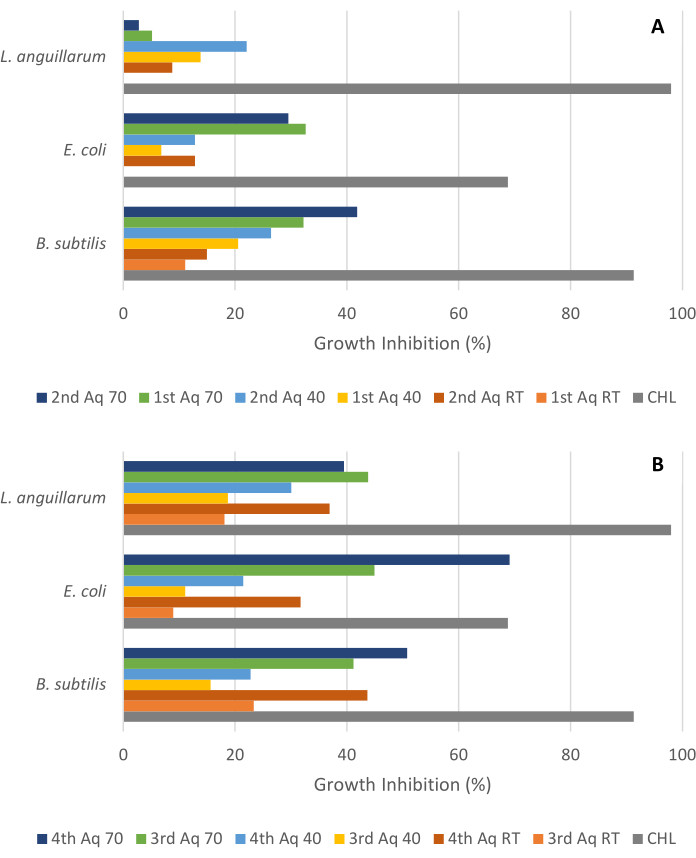
Figure 1: Growth inhibition of bacterial species in the presence of aqueous extracts of G. gracilis. Growth inhibition of 3 bacterial species (Bacillus subtilis, Escherichia coli, Listonella anguillarum) after 24 h of growth in a liquid medium, in the presence of aqueous extracts (Aq) of G. gracilis obtained at different temperatures, room temperature (RT), 40 °C (40) and 70 °C (70). The positive control was done with chloramphenicol (CHL), and the results are expressed as mean values (n = 8). Data refer to the 4 sequential extraction steps (1st, 2nd, 3rd, 4th). Please click here to view a larger version of this figure.
The ethanolic extracts seem to be particularly effective in inhibiting the growth of L. anguillarum, as shown in Figure 2. This shows the results obtained with the ethanolic extracts, also in the first and second extractions (Figure 2A) and the third and fourth extractions (Figure 2B), obtained after the first aqueous extraction.
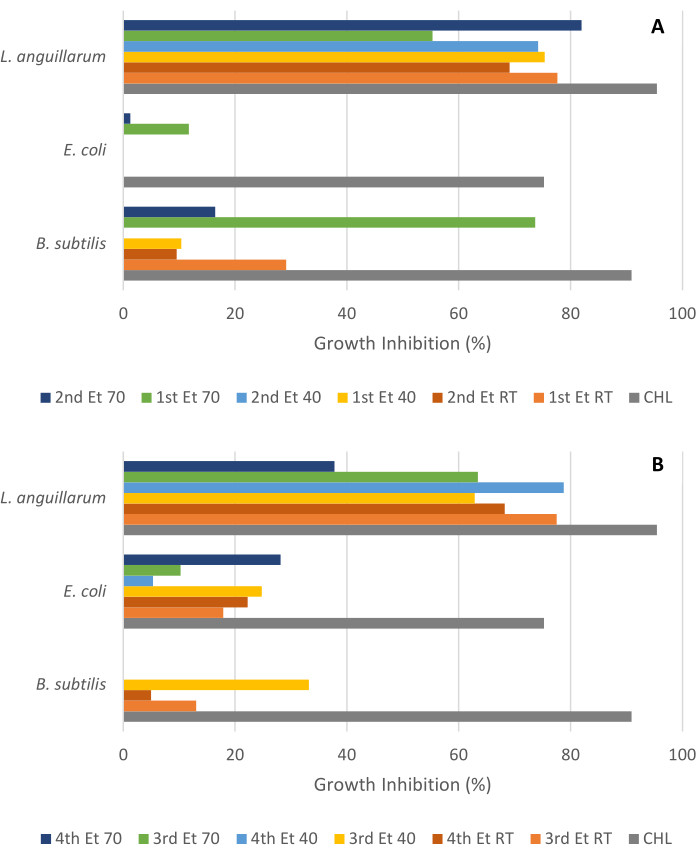
Figure 2: Growth inhibition of bacterial species in the presence of ethanolic extracts of G. gracilis. Growth inhibition of 3 bacterial species (Bacillus subtilis, Escherichia coli, Listonella anguillarum) after 24 h of growth, in a liquid medium, in the presence of ethanolic extracts (Et) of G. gracilis, obtained at different temperatures, room temperature (RT), 40 °C (40) and 70 °C (70). Positive control was done with chloramphenicol (CHL), and results were expressed as mean values (n = 8). Data refer to the 4 sequential extraction steps (1st, 2nd, 3rd, 4th). Please click here to view a larger version of this figure.
Antioxidant activity
Regarding the results that highlight the antioxidant potential of the various extracts, namely in the DPPH test, the results expressed in Figure 3 indicate that the temperature of 40 °C was the most effective, resulting in higher inhibition values of the oxidant activity, than those observed in extracts obtained at RT or 70 °C. This holds valid for the G. gracilis samples, and there may be large variations depending on the samples used and the algal growth conditions. Thus, it is recommended that tests be carried out to indicate the best conditions for each specific type of sample.
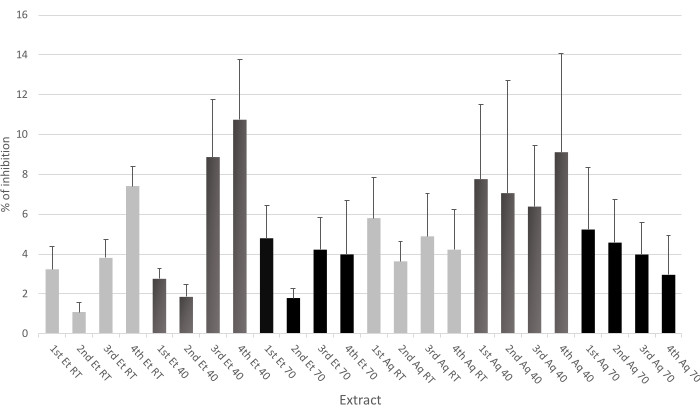
Figure 3: Inhibition of the DPPH radical (%) in the presence of extracts obtained at different temperatures. Extracts were obtained through ethanolic (Et) or aqueous (Aq) extraction. The 1st and 2nd extractions were made from dry biomass sequentially. The remaining ones (3rd and 4th) were made with biomass previously extracted with the alternative solvent. RT means room temperature; 40, extract obtained at 40 °C; and 70, extract obtained at 70 °C. Please click here to view a larger version of this figure.
Similar results were obtained in terms of total polyphenol quantification (Figure 4), with the temperature of 40 °C being considered the best in terms of antioxidant compound extraction. This shows that the antioxidant activity seems to be correlated with the phenolic components present in the extracts.
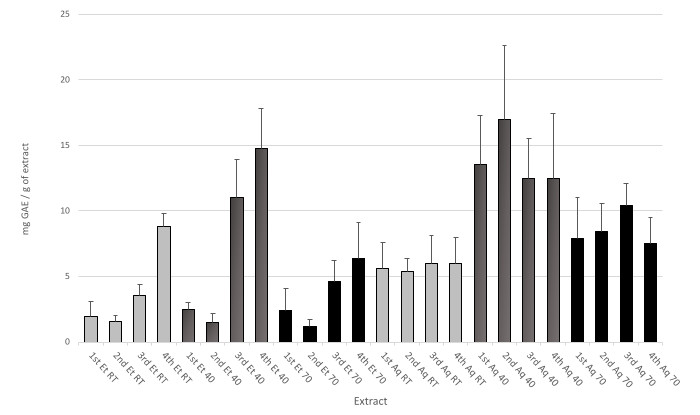
Figure 4: Quantification of total polyphenols content (TPC) in extracts obtained at different temperatures. The extracts were obtained by ethanolic (Et) or aqueous (Aq) extraction, where 1st and 2nd extraction were made sequentially from dry algae and the remaining (3rd and 4th) were made with biomass previously extracted with another solvent. RT means room temperature; 40, extract obtained at 40 °C; and 70, extract obtained at 70 °C. Please click here to view a larger version of this figure.
Cytotoxicity in HaCat cells
The first step to assess cosmetic ingredients´ safety is the study of their in vitro cytotoxicity in epidermal and dermal cell lines. As can be seen in Figure 5, no cytotoxic effects were observed on keratinocytes (HaCaT cells), suggesting that, at the maximum assayed concentration (1 mg/mL), both aqueous and ethanol extracts are safe for cutaneous use.
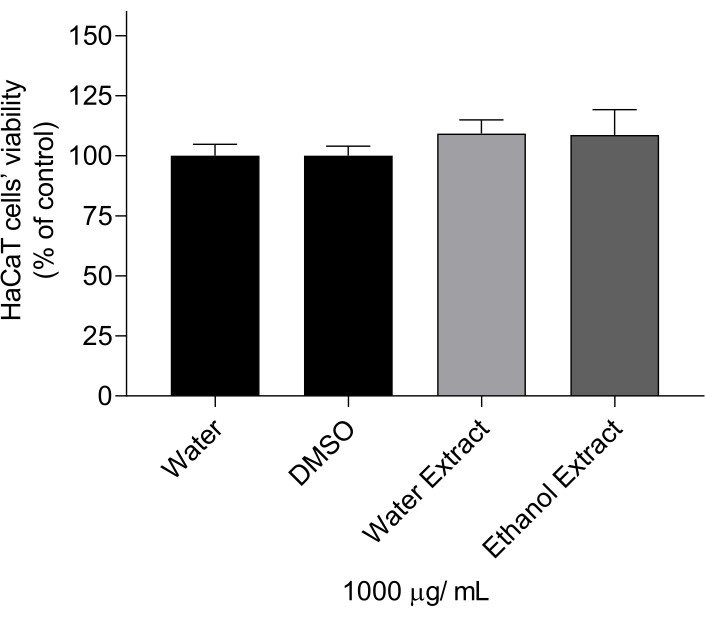
Figure 5: Cytotoxic effect of Gracilaria gracilis extracts (1 mg/mL) on HaCaT cells after 24 h of treatment. Values in each column are expressed as the mean ± standard error of the mean (SEM) of three independent experiments in triplicate. Please click here to view a larger version of this figure.
Food innovation
The final pasta formulations were obtained after numerous trials between theoretical formulation and sensory testing by a semi-trained panel. After this step, the chemical characterization was accessed, including nutritional evaluation, fatty acids and mineral elements profiles. It was possible to build a nutritional characterization (Table 1 and Table 2) and to verify the existence of expected nutritional claims based on the European legislation (REG (EU) No. 1169/2011)32.
| Nutrition Facts | by 100 g of Pasta | % RDI | |
| Energy | 1478.90 kJ (348.74 kcal) | 17 | |
| Lipids | 1.06 ± 0.10 g | 2 | |
| From what: | |||
| Saturated Fatty Acids | 0.38 ± 0.01 g | 2 | |
| Carbohydrates | 72.59± 0.21 g | 28 | |
| Fibre | 3.84 ± 0.20 g | ||
| Protein | 10.29 ± 0.20 g | 21 | |
| Salt | 0.22 ± 0.02 g | 9 | |
Table 1: Nutritional facts. Nutritional facts of developed pasta based on chemical analyses (n=3) of energy and carbohydrates obtained by calculation and respective percentage of recommended dose intake (n = 3).
These pasta formulations have been designed to appeal to a target consumer who has a healthier diet in mind, so the amount of fat per 100 g of a product must be as small as possible. Detailed analysis of the fatty acid profile shows a value of 0.38 g saturated fatty acids/100 g, which is well below the limit for low saturated fat products, meeting the initial goal in the production of this pasta. Regarding the fiber content, it was also possible, in accordance with European regulations, to claim this pasta formulation as a source of fiber.
In the mineral element characterization, determined by ICP-OES and presented in Table 2, it is reported the value of about 219 mg/100 g of Na present in 100 g of this product, so it cannot be verified that it is a product with low sodium content (<0.12 g/100 g). Due to the elevated sodium content naturally present in the ingredients, this product may not require the addition of salt in its confection.
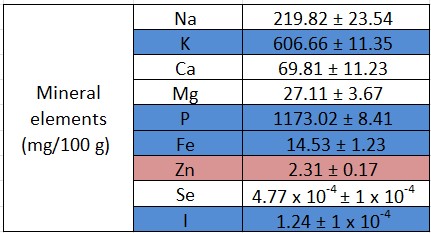
Table 2: Pasta mineral elements profile. Blue - high content of element; Red - source of a certain element (n = 3). Please click here to download this table.
According to the referred European Union regulation and the RDI% for each element, it can be seen that this product has a high content of K, P, Fe, and is also a source of Zn. It has Se, Mg, and Ca present in smaller quantities.
For the pasta acceptance tests, 86 testers were used, of which 63 were female and 23 male, aged over 18 years. The acceptance tests were based on hedonic scales of 9 points, as stipulated in the standards. The Healthy dough scored 5 and 6 on a hedonic scale from 1 to 9 for the parameters "Sea taste" and "Visual appearance", respectively (Figure 6).
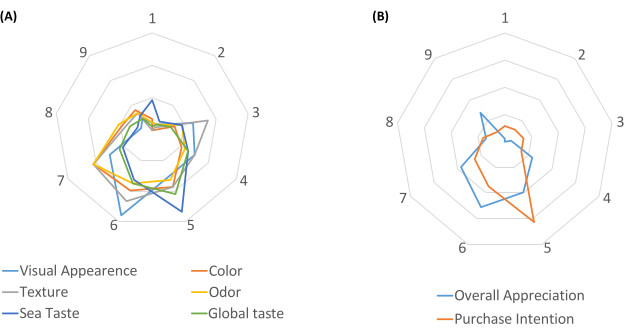
Figure 6: Results from sensory consumer acceptance tests. (A) The hedonic choice for visual appearance, color, texture, odor, sea taste, and overall taste. (B) The hedonic choice for overall appreciation and purchase intention. Scale 1-9, where 1 is a poor evaluation, and 9 is a very good evaluation (n = 86). Please click here to view a larger version of this figure.
The pasta scored 5 and 6 on a hedonic scale from 1 to 9 for the parameters "Sea taste" and "Visual appearance", respectively (Figure 6A). This pasta obtained a low value on this scale regarding the texture parameter (considering other formulations already studied), probably because the base ingredient is rice flour; despite this, it obtained values on a scale from 1 to 9, ranging from 4 to 7 which reflects a good acceptance by the average consumer. On a hedonic scale from 1 to 9, the pasta had as most frequent responses the value of 5 for purchase intention and the value of 6 for overall appreciation, as shown in Figure 6B. It was found that about 65% of the tasters chose a response equal to or higher than the score of 6 for the overall assessment of this pasta. The color stability of the yogurts with pigment was evaluated for 12 days at -4 °C, and the results are presented in Figure 7.
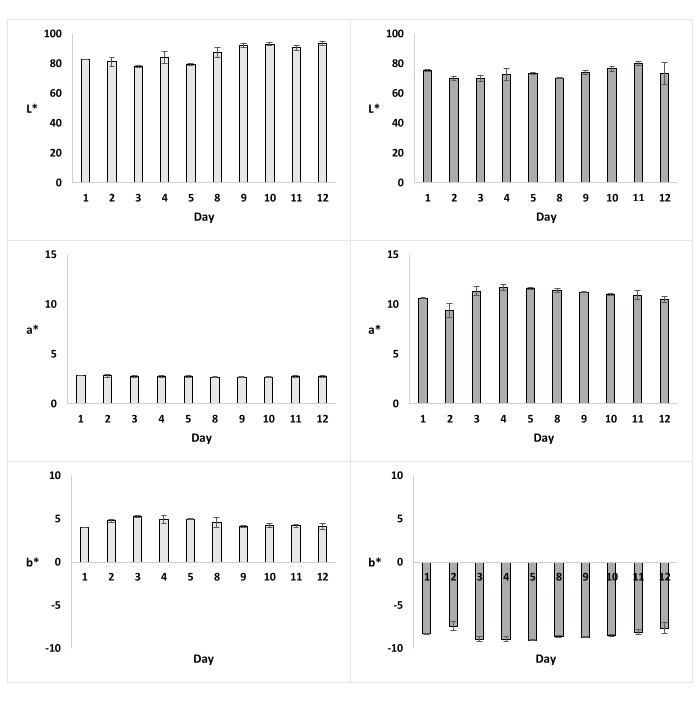
Figure 7: Color stability of the yogurts. (left) Control yogurts and (right) yogurts with Gracilaria gracilis pigment during 12 days of storage. The a*, b*, and L* parameters are dimensionless. Please click here to view a larger version of this figure.
The results indicate that the a* and b* parameters were stable over time, while L* values showed higher variance. The lightness demonstrated higher values after 8 days of storage. While some differences were found in the lightness parameters, indicating that the samples were lighter over time, the parameters of redness (a*) and blue (b*) showed good stability. The incorporation of the extracts in yogurts showed good color retention, with a ΔE of 7.01 ± 2.36 after 12 days of storage. Regarding the sensory evaluation of the yogurt, 9 in 13 panelists correctly identified the correct sample in the triangle test, suggesting that there were differences between the yogurts that allowed this distinction. The hedonic tests made to the semi-trained panel showed a good acceptance of the product, reflected in scores above 7 (Figure 8). The mode of the score for any of the three attributes under test was 9, leading to score averages above 8. The best evaluation was made to color, which reflects an excellent acceptance by the panel, a revealing result.
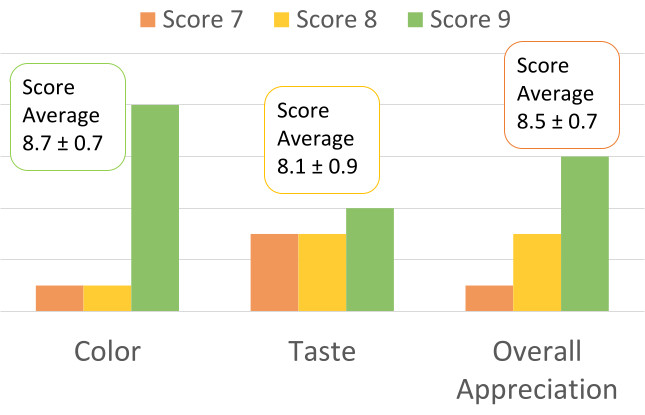
Figure 8: Results of the hedonic sensory evaluation of the yogurt with Gracilaria gracilis pigment. Please click here to view a larger version of this figure.
Discussion
The antimicrobial activity tests in a liquid medium are used to evaluate the effectiveness of antimicrobial substances against microorganisms suspended in a liquid medium and are usually performed to determine the ability of a substance to inhibit growth or kill microorganisms35,36,37,38. They are used to evaluate the sensitivity of microorganisms to antimicrobial agents and are conducted in test tubes or microtitration plates, where different concentrations of the antimicrobial substance are tested against a standardized suspension of the target microorganism22. Antimicrobial activity is assessed by measuring microbial growth or the presence/absence of turbidity in the culture medium after a proper incubation period.
There are several techniques and methods to perform these tests, such as the broth dilution method, agar diffusion method (such as the disc diffusion test), and the broth microdilution method, which is one of the most used38. Some of the most critical points in these methods include the proper preparation of the inoculum, the choice of the culture medium, the quality of the antimicrobials used, the standardization of the technique, and effective contamination control. The inoculum, which is a standardized suspension of microorganisms, must be prepared correctly to ensure the accuracy of the results. This involves an appropriate selection of microbial culture, a proper culture of pure strains, adjustment of cell concentration, and standardization of the suspension to obtain an appropriate optical density or cell concentration.
The culture medium used should be selected carefully to ensure that it provides the ideal growth conditions for the microorganism under test. Chemical composition, pH, and other factors can affect test results. It is important to follow the manufacturer's recommendations for the preparation of the culture medium. The quality of the antimicrobial agents used as control is fundamental, and it is important to ensure that these are pure, within shelf life, and stored correctly. Labeling and expiry dates should always be consulted, following the manufacturer's instructions. The standardization of the technique is also crucial to ensure the accuracy of the results. This includes the addition of the tested concentrations to the culture medium, as well as the maintenance of aseptic conditions throughout the procedure. Additionally, cross-contamination of microorganisms during testing can lead to false or unreliable results. It is essential to follow strict aseptic practices throughout the procedure, from the manipulation of the inoculum to the incubation of the tubes or plates. The use of clean countertops, proper pipetting techniques, and proper disposal of materials are important measures to avoid contamination.
Attention to detail and strict adherence to established protocols and guidelines are crucial to minimize errors and ensure the reliability of results in antimicrobial activity tests in a liquid medium. Also, the antimicrobial activity tests have some limitations that should be considered37.
Factors such as pH, temperature, presence of blood components, and interactions with the immune system are not considered in these tests, which can limit the ability to predict the effectiveness of an antimicrobial agent in a living organism. Also, tests measure the ability of an antimicrobial substance to inhibit microbial growth or kill microorganisms and do not provide detailed information about the mechanism of action of the antimicrobial or its selectivity against specific microorganisms. There are limitations in detecting resistance, as the methods employed may not allow the detection or prediction of the development of resistance over time. Some microorganisms may develop resistance mechanisms in response to prolonged exposure to an antimicrobial, and these changes may not be easily detected through these tests. Tests of antimicrobial activity in a liquid medium generally do not consider other host factors that may influence the effectiveness of an antimicrobial agent, such as the presence of biofilms or the host's immune response.
It is important to consider these limitations and to complement testing for antimicrobial activity in a liquid media with other methods and approaches, such as in vivo studies, biofilm models, and others39. In the area of bioprospecting for bioactive macroalgae compounds, antimicrobial activity tests can be used to evaluate the antimicrobial potential of algae extracts or isolated compounds, identifying substances with antimicrobial activity against specific microbial pathogens, which can have applications in fields such as the production of medicines, cosmetics, food or agricultural products40.
Antioxidant activity tests are methods used to evaluate the ability of a compound or extract to neutralize free radicals or reduce oxidative stress. These tests are widely used in antioxidant research, both in foods and in natural products such as algae, for example. There are several methods to evaluate the antioxidant activity, and one of the most commonly used is the free radical absorption capacity. In this test, a stable free radical, the 2,2-diphenyl-1-picrylhydrazyl (DPPH), is used to evaluate the ability of a compound to donate an electron and neutralize the free radical. Antioxidant activity is measured by reducing the purple color of DPPH, which occurs when the antioxidant compound donates an electron to the free radical. Other methods include the oxygen radical absorption capacity (ORAC), the iron reduction capacity (FRAP) or the free radical reduction capacity (ABTS)41.
Quantification of total polyphenols (QTP), on the other hand, is not a direct method for determining the antioxidant activity but provides a measure of the total concentration of polyphenols in a sample, although several interfering substances can affect the results. Although many polyphenols are known to have antioxidant properties, the antioxidant activity of a compound is related to several factors, such as its chemical structure, concentration, ability to donate or capture free radicals, and interactions with other cellular components42. The simple quantification of total polyphenols cannot provide an evaluation of the antioxidant activity of the sample. However, it is important to note that the presence of polyphenols in a sample may be associated with a higher likelihood of antioxidant activity since many polyphenols possess antioxidant properties. Thus, QTP can serve as a preliminary indicator of the presence of polyphenols in the sample, but confirmation of antioxidant activity requires antioxidant activity assays. Polyphenols are a class of chemical compounds widely distributed in nature, found in foods, plants, fruits, vegetables, and algae. There are different methods for the quantification of total polyphenols, and the Folin-Ciocalteu method is one of the most used. QTP gives a general measure of the concentration of polyphenols but does not specify the individual polyphenolic compounds present in the sample. Therefore, it is a quantitative but not a qualitative method. Furthermore, it is important to consider that different polyphenols have different antioxidant capacities and biological activities, so QTP does not provide detailed information on the specific functional properties of the polyphenols present.
Each method has its advantages and limitations, and the choice of a given test depends on the characteristics of the compound under study and the purpose of the analysis. It is important to follow the specific instructions of each method to ensure reliable and comparable results. When determining the antioxidant capacity, some of the common critical steps include, firstly, the sample preparation. It is important to prepare the samples correctly, ensuring that adequate concentrations are obtained and avoiding contamination. This involves the precise weighing of the compounds or extracts and dissolving them in appropriate solvents. It is also important to consider the stability of the compounds and extracts during the process of preparation, storage, and handling. All the reagents used in the antioxidant activity tests must be properly prepared and standardized to ensure the reproducibility of the results. This involves the correct preparation of the gallic acid standard and the accuracy of the volumes. Reaction time is a critical aspect of getting accurate results in antioxidant tests. It is necessary to optimize the incubation time to ensure a complete reaction between the antioxidant compound and the free radical. Insufficient time can lead to underestimation of antioxidant activity, while excessive time can result in degradation of the compounds or interference from secondary reactions. Also, the temperature during tests must be controlled accurately and consistently. Temperature influences the speed of chemical reactions and can affect results. It is important to follow the temperature conditions recommended by the specific methods and ensure temperature stability throughout the procedure. The inclusion of appropriate controls is essential to validate the results of antioxidant tests. This can include positive controls (compounds known to have antioxidant activity) and negative controls (samples without antioxidant activity). Controls provide a basis for comparison for the interpretation of results and help ensure the accuracy of the data obtained. To obtain reliable results, it is recommended to perform tests of antioxidant activity on replicates and repeat the experiment several times to raise the significance of the data and to obtain more reliable and robust results.
Antioxidant activity testing methods have some limitations that should be considered when interpreting the results, namely, the fact that, in liquid media, they may not fully capture the complexity of biological systems and interactions between different compounds, the wide range of antioxidant reactions that can occur, cellular metabolism, and environmental factors that can influence antioxidant activity. So, different tests should be used. One must also be aware of the lack of direct correlation with health benefits; although antioxidant activity is often associated with health benefits, this does not always translate directly into health benefits in living organisms due to many other factors, such as bioavailability, metabolism, and interactions with other biological systems.
It is important to keep in mind that antioxidant activity tests are useful tools for the initial evaluation of the antioxidant potential of compounds and extracts but should not be considered a definitive indicator of biological effects or health benefits. Additional studies are needed to fully understand the impact of antioxidants on the body.
Although the methods of testing the antioxidant activity in liquid medium are widely used in research and have their advantages and limitations, when compared to the alternatives, these methods can be considered good in terms of practicality, speed, cost, and ease of implementation. One of the main advantages is the simplicity and speed of the procedures and their suitability for initial research, compound screening, and large-scale studies. These methods are relatively quick to perform and can provide results in a short period, in a more affordable way, and require less specialized equipment compared to other methods.
Algae are known for their ability to produce bioactive compounds, including antioxidants, which may have beneficial health properties43. Algae extracts can be prepared from different parts of the algae and can be obtained using different solvents, such as water, ethanol, methanol, or acetone, among others. It is important to remember that the antioxidant activity of algae extracts can vary depending on several factors, such as the species of algae, the extraction methodology, and the concentration of the bioactive compounds present. Therefore, it is recommended to perform antioxidant activity tests on replicates and to perform comparisons with appropriate controls to obtain more reliable results. These methods can be used as an initial tool in the screening and selection of algae extracts with antioxidant potential for further studies.
The MTT assay is a widely used technique for a preliminary evaluation of in vitro cytotoxic effects of substances for human and animal use. However, despite being the most used method for testing cytotoxicity, the conversion of MTT to formazan crystals is influenced by numerous factors like metabolic rate and the number of mitochondria, and it is only applicable to adherent cell targets14. The main critical steps of the protocol described here are related to the eventual occurrence of cell culture contaminations, undesirable HaCaT cells´ growth, and a low percentage of cell confluency. There are other methods, such as lactate dehydrogenase (LDH), adenosine triphosphate (ATP), and colony formation assays for measuring cytotoxicity. However, all of them have advantages and constraints. Ghasemi et al. (2021)44 evaluated the effect of several variables on the MTT assay measurements on a prostate cancer cell line (PC-3). Factors such as cell seeding density, the concentration of MTT, incubation time after MTT addition, serum starvation, the composition of cell culture media, released intracellular contents, and extrusion of formazan to the extracellular space were analyzed. From this study, useful recommendations on how to apply the assay and a perspective on where the assay's utility is a powerful tool, but likewise where it has limitations, were outlined by these authors. Nevertheless, the MTT assay is a rapid, highly sensitive,and easy methodology that can be applied as a preliminary cytotoxicity assessment of many substances with potential application in the therapeutic, food, feed, agriculture, and environmental areas. In particular, the MTT assay here performed evidenced that the ethanol and aqueous extracts from G. gracilis, in the assayed concentrations, did not affect keratinocyte viability and can proceed for in vivo assays to ensure they are completely safe for human cutaneous use.
The use of marine resources in food products has, once again, shown its potential not only to obtain products with added nutritional value but also to find cleaner-label products. The addition of whole G. gracilis (pasta) or extract (as food coloring) shows market potential, and its application could be one of the strategies for companies to stand out in the market, satisfy consumers' nutritional needs, and follow their market trends.
When seaweed was added to the pasta formulations, it was initially found that the structure was altered and that it was not possible to obtain the desired dough shapes. We had the challenge of adjusting quantities and adding other ingredients not previously foreseen, aiming to maintain the texture of the pasta. Besides the appropriate amount of each ingredient, the extrusion method was adapted throughout the development of the pasta. Apart from this difficulty, the development of new products is based on three fundamental principles: the product must be sensorial appealing (texture, flavor, smell); the product must have added nutritional value; and it must make maximum use of sustainable ingredients and methodologies. In this sense, another major challenge is the use of the sensory panel to achieve the most appealing formulation. Most of the physicochemical analyses carried out on pasta were already optimized for food matrices; however, in this work, the sample preparation was optimized so that it could be efficiently applied to all the analysis methods.
Regarding the use of G. gracilis pigment as a colorant, a refrigerated product was chosen due to the thermal sensitivity of this type of molecule45. Since yogurt preparation involves thermal processing, the pigment was added to the final product. Mixing the pigment in the yogurt resulted in a product slightly more fluid than the control without pigment. In fact, at the end of the triangle test, some panelists commented that the only difference between samples was the texture. This is a good result since the main purpose of the triangle test was to verify if there were noticeable differences between yogurt with and without pigment, especially differences in taste and smell, as seaweed extracts may confer unpleasant taste/smell to food products. This was a preliminary study involving a small semi-trained panel. In further studies, a larger number of tasters should be considered to achieve more reliable market results. As for the evaluation of pigment stability in yogurt, further studies could include the evaluation of other physicochemical properties of the yogurt with pigment over time, such as pH, water activity (aw), and texture. Sensory evaluation over time would also be desirable.
In conclusion, the protocols described here highlight the potential of the red seaweed G. gracilis as a source of ingredients to develop novel products with potential applications in the pharmaceutical, dermocosmetic, and food industries. Moreover, the post-extracted residual biomass remains a valuable material to be applied as a plant growth biostimulant, soil enrichment, fish feeding, or feedstock to obtain biochar and/or functionalized carbons for water purification purposes. The biorefinery approach described here can be applied to other seaweed species, promoting a blue circular economy and environmental sustainability.
Disclosures
The authors have nothing to disclose.
Acknowledgements
This work was supported by the Portuguese Foundation for Science and Technology (FCT) through the Strategic Projects granted to MARE-Marine and Environmental Sciences Centre (UIDP/04292/2020 and UIDB/04292/2020), and Associate Laboratory ARNET (LA/P/0069/2020). FCT also funded the individual doctoral grants awarded to Marta V. Freitas (UI/BD/150957/2021) and Tatiana Pereira (2021. 07791. BD). This work was also financially supported by the project HP4A - HEALTHY PASTA FOR ALL (co-promotion no. 039952), co-funded by ERDF - European Regional Development Fund, under the Portugal 2020 Programme, through COMPETE 2020 - Competitiveness and Internationalisation Operational Programme.
Materials
| Name | Company | Catalog Number | Comments |
|---|---|---|---|
| Absolute Ethanol | Aga, Portugal | 64-17-5 | |
| Ammonium Chloride | PanReac | 12125-02-9 | |
| Amphotericin B | Sigma-Aldrich | 1397-89-3 | |
| Analytical scale balance | Sartorius, TE124S | 22105307 | |
| Bacillus subtilis subsp. spizizenii | German Collection of Microorganisms and Cell Cultures (DSMZ) | DSM 347 | |
| Biotin | Panreac AppliChem | 58-85-5 | |
| Centrifuge | Eppendorf, 5810R | 5811JH490481 | |
| Chloramphenicol | PanReac | 56-75-7 | |
| CO2 Chamber | Memmert | N/A | |
| Cool White Fluorescent Lamps | OSRAM Lumilux Skywhite | N/A | |
| Densitometer McFarland | Grant Instruments | N/A | |
| DMEM medium | Sigma-Aldrich | D5796 | |
| DMSO | Sigma-Aldrich | 67-68-5 | |
| DPPH | Sigma, Steinheim, Germany | 1898-66-4 | |
| Escherichia coli (DSM 5922) | German Collection of Microorganisms and Cell Cultures (DSMZ) | DSM5922 | |
| Ethanol 96% | AGA-Portugal | 64-17-5 | |
| Ethylenediaminetetraacetic Acid Disodium Salt Dihydrate (Na2EDTA) | J.T.Baker | 6381-92-6 | |
| Fetal Bovine Serum (FBS) | Sigma-Aldrich | F7524 | |
| Filter Paper (Whatman No.1) | Whatman | WHA1001320 | |
| Flasks | VWR International, Alcabideche, Portugal | N/A | |
| Folin-Ciocalteu | VWR Chemicals | 31360.264 | |
| Gallic Acid | Merck | 149-91-7 | |
| Germanium (IV) Oxide, 99.999% | AlfaAesar | 1310-53-8 | |
| HaCaT cells – 300493 | CLS-Cell Lines Services, Germany | 300493 | |
| Hot Plate Magnetic Stirrer | IKA, C-MAG HS7 | 06.090564 | |
| Iron Sulfate | VWR Chemicals | 10124-49-9 | |
| Laminar flow hood | TelStar, Portugal | 526013 | |
| LB Medium | VWR Chemicals | J106 | |
| Listonella anguillarum | German Collection of Microorganisms and Cell Cultures (DSMZ) | DSM 21597 | |
| Manganese Chloride | VWR Chemicals | 7773.01.5 | |
| Micropipettes | Eppendorf, Portugal | N/A | |
| Microplates | VWR International, Alcabideche, Portugal | 10861-666 | |
| Microplates | Greiner | 738-0168 | |
| Microplates (sterile) | Fisher Scientific | 10022403 | |
| Microplate reader | Epoch Microplate Spectrophotometer, BioTek, Vermont, USA | 1611151E | |
| MTT | Sigma-Aldrich | 289-93-1 | |
| Muller-Hinton Broth (MHB) | VWR Chemicals | 90004-658 | |
| Oven | Binder, FD115 | 12-04490 | |
| Oven | Binder, BD115 | 04-62615 | |
| Penicillin | Sigma-Aldrich | 1406-05-9 | |
| pH meter Inolab | VWR International, Alcabideche, Portugal | 15212099 | |
| Pippete tips | Eppendorf, Portugal | 5412307 | |
| Pyrex Bottles Media Storage | VWR International, Alcabideche, Portugal | 16157-169 | |
| Rotary Evaporator | Heidolph, Laborota 4000 | 80409287 | |
| Rotavapor | IKA HB10, VWR International, Alcabideche, Portugal | 07.524254 | |
| Sodium Carbonate (Na2CO3) | Chem-Lab | 497-19-8 | |
| Sodium Chloride (NaCl) | Normax Chem | 7647-14-5 | |
| Sodium Phosphate Dibasic | Riedel-de Haën | 7558-79-4 | |
| SpectraMagic NX | Konica Minolta, Japan | color data analysis software | |
| Spectrophotometer | Evolution 201, Thermo Scientific, Madison, WI, USA | 5A4T092004 | |
| Streptomycin | Sigma-Aldrich | 57-92-1 | |
| Thiamine | Panreac AppliChem | 59-43-8 | |
| Trypsin-EDTA | Sigma-Aldrich | T4049 | |
| Tryptic Soy Agar (TSA) | VWR Chemicals | ICNA091010617 | |
| Tryptic Soy Broth (TSB) | VWR Chemicals | 22091 | |
| Ultrapure water | Advantage A10 Milli-Q lab, Merck, Darmstadt, Germany | F5HA17360B | |
| Vacuum pump | Buchi, Switzerland | FIS05-402-103 | |
| Vitamin B12 | Merck | 68-19-9 |
References
- Charoensiddhi, S., Abraham, R. E., Su, P., Zhang, W. Seaweed and seaweed-derived metabolites as prebiotics. Advances in Food and Nutrition Research. 91, 97-156 (2020).
- Roohinejad, S., Koubaa, M., Barba, F. J., Saljoughian, S., Amid, M., Greiner, R. Application of seaweeds to develop new food products with enhanced shelf-life, quality, and health-related beneficial properties. Food Research International. 99, 1066-1083 (2017).
- Hurd, C. L., Harrison, P. J., Bischof, K., Lobban, C. S. Seaweed Ecology and Physiology. (second). , Cambridge University Press, UK. (2014).
- Freitas, M. V., Mouga, T., Correia, A. P., Afonso, C., Baptista, T. New insights on the sporulation, germination, and nutritional profile of Gracilaria gracilis (Rhodophyta) grown under controlled conditions. Journal of Marine Science and Engineering. 9 (6), 562(2021).
- Friedlander, M. Advances in cultivation of Gelidiales. Journal of Applied Phycology. 20 (5), 451-456 (2008).
- Matos, G. S., Pereira, S. G., Genisheva, Z. A., Gomes, A. M., Teixeira, J. A., Rocha, C. M. R. Advances in extraction methods to recover added-value compounds from seaweeds: Sustainability and functionality. Foods. 10, 516(2021).
- Ummat, V., Sivagnanam, S. P., Rajauria, G., O'Donnell, C., Tiwari, B. K. Advances in pre-treatment techniques and green extraction technologies for bioactives from seaweeds. Trends in Food Science & Technology. 110, 90-106 (2021).
- Pérez, M. J., Falqué, E., Domínguez, H. Seaweed Antimicrobials, Present Status and Future Perspectives. Handbook of Algal Technologies andPhytochemicals:Volume I Food, Health and Nutraceutical Applications. Ravishankar, G., Ambati, R. R. , 1st ed, CRC Press, Boca Raton, Florida. (2019).
- Cavallo, R. A., Acquaviva, M. I., Stabili, L., Cecere, E., Petrocelli, A., Narracci, M. Antibacterial activity of marine macroalgae against fish pathogenic Vibrio species. Central European Journal of Biology. 8, 646-653 (2013).
- Shannon, E., Abu-Ghannam, N. Antibacterial derivatives of marine algae: An overview of pharmacological mechanisms and applications. Marine Drugs. 14 (4), 81(2016).
- Capillo, G., et al. New insights into the culture method and antibacterial potential of Gracilaria gracilis. Marine Drugs. 16 (12), 492(2018).
- Francavilla, M., Franchi, M., Monteleone, M., Caroppo, C. The red seaweed Gracilaria gracilis as a multi products source. Marine Drugs. 11 (10), 3754-3776 (2013).
- Sánchez-Ayora, H., Pérez-Jiménez, J. Antioxidant Capacity of Seaweeds: In Vitro and In Vivo Assessment. Marine Phenolic Compounds. Pérez-Correa, J. R., Mateos, R., Domínguez, R. , Elsevier. 299-341 (2023).
- Anil, S., Sweety, V. K., Vikas, B., Betsy-Joseph, B. Cytotoxicity and Cell Viability Assessment of Biomaterials. Cytotoxicity. , Intechopen. 111822(2023).
- Mosmann, T. Rapid colorimetric assay for cellular growth and survival: Application to proliferation and cytotoxicity assays. Journal of Immunological Methods. 65 (1-2), 55-63 (1983).
- Roleda, M. Y., et al. Variations in polyphenol and heavy metal contents of wild-harvested and cultivated seaweed bulk biomass: Health risk assessment and implication for food applications. Food Control. 95, 121-134 (2019).
- Souza, K. D., et al. Gastronomy and the development of new food products: Technological prospection. International Journal of Gastronomy and Food Science. 33, 100769(2023).
- Pereira, T., et al. Optimization of phycobiliprotein pigments extraction from red algae Gracilaria gracilis for substitution of synthetic food colorants. Food Chemistry. 321, 126688(2020).
- Redmond, S., Green, L., Yarish, C., Kim, J., Neefus, C. New England Seaweed Culture Handbook-Nursery Systems. Redmond, S., Green, L., Yarish, C., Kim, J., Neefus, C. , Connecticut Sea Grant, University of Connecticut. (2014).
- Yong, Y. S., Yong, W. T. L., Anton, A. Analysis of formulae for determination of seaweed growth rate. Journal of Applied Phycology. 25 (6), 1831-1834 (2013).
- Patarra, R. F., Carreiro, A. S., Lloveras, A. A., Abreu, M. H., Buschmann, A. H., Neto, A. I. Effects of light, temperature and stocking density on Halopteris scoparia growth. Journal of Applied Phycology. 29 (1), 405-411 (2017).
- NCCLS, National Committee for Clinical Laboratory Standards, Clinical and Laboratory Standards Institute. Performance Standards for Antimicrobial Disk Susceptibility Tests: Approved Standard. 32, 11th ed, Wayne, PA, USA. M02-M11 (2012).
- Singleton, V. L., Rossi, J. A. J. Colorimetry to total phenolics with phosphomolybdic acid reagents. American Journal of Enology and Viticulture. 16, 144-158 (1965).
- Duan, X. J., Zhang, W. W., Li, X. M., Wang, B. G. Evaluation of antioxidant property of extract and fractions obtained from a red alga, Polysiphonia urceolata. Food Chemistry. 95 (1), 37-43 (2006).
- Freitas, R., et al. Highlighting the biological potential of the brown seaweed Fucus spiralis for skin applications. Antioxidants. 9 (7), 611(2020).
- Duarte, A., et al. Seasonal study of the nutritional composition of unexploited and low commercial value fish species from the Portuguese coast. Food Science and Nutrition. 10 (10), 3368-3379 (2020).
- Folch, J., Lees, M., Stanley, G. A simple method for the isolation and purification of total lipides from animal tissues. Journal of Biological Chemistry. 226 (1), 497-509 (1957).
- ISO 6865. Animal feeding stuffs - Determination of crude fibre content - Method with intermediate filtration. Bureau of Indian Standards (BIS). , (2000).
- Fernández, A., Grienke, U., Soler-Vila, A., Guihéneuf, F., Stengel, D. B., Tasdemir, D. Seasonal and geographical variations in the biochemical composition of the blue mussel (Mytilus edulis L.) from Ireland. Food Chemistry. 177, 43-52 (2015).
- Pinto, F., et al. Annual variations in the mineral element content of five fish species from the Portuguese coast. Food Research International. 158, 111482(2022).
- FAO. Food energy - methods of analysis and conversion factors. , FAO Food and Nutrition Paper 77 at https://www.fao.org/fileadmin/templates/food_composition/documents/book_abstracts/Food_energy.pdf (2003).
- Regulation (EU) Nr. 1169/2011 of the European Parliament and of the Council of 25 -10-2011. 25, https://eur-lex.europa.eu/legal-content/EN/ALL/?uri=CELEX%3A32011R1169 (2011).
- Pathare, P. B., Opara, U. L., Al-Said, F. A. J. Colour measurement and analysis in fresh and processed foods: A review. Food and Bioprocess Technology. 6 (1), 36-60 (2013).
- ISO 4120. Sensory analysis - Methodology - Triangle test. International Standard. , https://www.iso.org/standard/33495.html (2004).
- Reller, L. B., Weinstein, M., Jorgensen, J. H., Ferraro, M. J. Antimicrobial susceptibility testing: A review of general principles and contemporary practices. Clinical Infectious Diseases. 49 (11), 1749-1755 (2009).
- Balouiri, M., Sadiki, M., Ibnsouda, S. K. Methods for in vitro evaluating antimicrobial activity: A review. Journal of Pharmaceutical Analysis. 6 (2), 71-79 (2016).
- Gajic, I., et al. Antimicrobial susceptibility testing: A comprehensive review of currently used methods. Antibiotics. 11 (4), 427(2022).
- Gonzalez-Pastor, R., et al. Current landscape of methods to evaluate antimicrobial activity of natural extracts. Molecules. 28 (3), 1068(2023).
- Li, J., et al. Antimicrobial activity and resistance: Influencing factors. Frontiers in Pharmacology. 13 (8), 364(2017).
- Silva, A., et al. Macroalgae as a source of valuable antimicrobial compounds: Extraction and applications. Antibiotics. 9 (10), 642(2020).
- Munteanu, I. G., Apetrei, C. Analytical methods used in determining antioxidant activity: A review. International Journal of Molecular Sciences. 22 (7), 3380(2021).
- Ma, S., et al. Comparison of common analytical methods for the quantification of total polyphenols and flavanols in fruit juices and ciders. Journal of Food Science. 84 (8), 2147-2158 (2019).
- Tziveleka, L. A., Tammam, M. A., Tzakou, O., Roussis, V., Ioannou, E. Metabolites with antioxidant activity from marine macroalgae. Antioxidants. 10 (9), 1431(2021).
- Ghasemi, M., Turnbull, T., Sebastian, S., Kempson, I. The MTT assay: Utility, limitations, pitfalls, and interpretation in bulk and single-cell analysis. International Journal of Molecular Sciences. 22 (23), 12827(2021).
- Pereira, T., Barroso, S., Mendes, S., Gil, M. M. Stability, kinetics, and application study of phycobiliprotein pigments extracted from red algae Gracilaria gracilis. Journal of Food Science. 85 (10), 3400-3405 (2020).
Reprints and Permissions
