Here, we present a protocol detailing a minimally invasive treatment for breast abscesses during the non-lactation period. This method effectively treats single breast abscesses, and the indwelling needle can be used as an effective tool for the puncture and irrigation of single breast abscesses in a non-lactation period.
Method Article
Indwelling Needle Puncture and Irrigation in the Conservative Treatment of Breast Abscess During Non-Lactation Period
* These authors contributed equally
In This Article
Summary
Abstract
The objective of this study is to observe the effect of indwelling needle puncture and irrigation in the conservative treatment of breast abscesses in the non-lactation period. Non-lactating breast abscess patients were treated at the Daping Medical Breast Surgery Clinic, Chongqing. In the Incisive drainage group, 21 patients were treated with conventional incision and drainage. In the Indwelling needle group, 20 patients were treated by puncture and irrigation with a 20 G indwelling needle. The pain VAS scores and wound satisfaction in the Indwelling needle group were significantly lower than those in the Incisive drainage group (P < 0.001), and the cure time and complications were also significantly lower in the Indwelling needle group (P < 0.05). The cure rates of the two groups were similar (P > 0.05). There was a difference in the duration of illness, location, and number of pus cavities between the treatment failure and the treatment recovery (P < 0.05). However, there was no difference in the size of the pus cavity and the maximum amount of pus aspiration (P > 0.05). The indwelling needle can be used as an effective tool for puncture and irrigation of single breast abscess in a non-lactation period, potentially for non-invasive treatment of breast abscesses.
Introduction
Non-puerperal mastitis (NPM) is a kind of chronic breast inflammation involving breast ducts and glands. NPM is a group of diseases, including mammary duct ectasia, periductal mastitis, plasma cell mastitis, and granulomatous lobular mastitis, and abscess is a marker that indicates that the disease has become severe1. The incidence of NPM has been increasing year by year recently, and the onset age of NPM tends to be younger2. However, in clinical practice, the management of the disease has met with problems including unknown etiology, easily missed diagnosis, misdiagnosis or delayed diagnosis, unclear treatment plan, curative side effects, etc. The overall rate of misdiagnosis for NPM is still nearly 40%3 at present, which makes NPM an intractable breast disease. NPM is easy to recurrent and often causes breast deformities, which seriously affect the physical and mental health of patients.
At present, the management of breast abscesses includes anti-infection, anti-inflammation, and incision and drainage1. However, patients suffer from large wounds caused by incisions and drainage and the great pain caused by frequent dressing changes. Moreover, many patients are tortured by obvious scars or shape changes of the breast after recovery. Therefore, reducing injuries from surgery and improving the outcome has become the focus in the management of NPM.
Recently, a conservative method of pus discharge was built, which punctures and irrigates the abscess cavity using a 16 G/18 G steel needle under the guidance of the B-mode ultrasound scan at the early stage of an abscess. This method could achieve the goal of segmental resection and better patient satisfaction4,5. However, ultrasound-guided localization increased the cost of equipment and labor and was generally not convenient for outpatients. Nonetheless, to achieve a satisfactory effect, the cavity needed to be rinsed 3-6 times every day for more than 3 days until the liquid became clear. Besides, the steel needle is too hard to adjust the flushing angle and too sharp to avoid damage to the internal tissue of the breast, which often causes bleeding and pain. Repeated puncture with a thick needle daily was also a psychological burden to patients.
The intravenous indwelling needle is the most commonly used clinical apparatus at present. It is light for wear, and its smooth hose is not easy to distort, obstruct, or cause mechanical irritation to blood vessels6. Indwelling needles are also recently used as the drainage apparatus of minimally invasive management, showing advantages in wound size, fixation, and recovery speed. It has been successfully used in breast cancer patients with chest abscess, scalp hematoma, or symptomatic seroma after mastectomy, and the effect was satisfactory6,7,8,9.
In this study, we punctured and irrigated patients with purulent mastitis in a non-lactation period using 20 G indwelling needles to treat the abscess. This protocol improved the recovery and reduced the discomfort, which provided a new option for minimally invasive management of breast abscesses.
Protocol
The study was approved by the Ethical Committee of Army Medical University (reference number: 2018-106). The patients included were fully informed and joined the study voluntarily and willingly.
1. Patients
NOTE: Non-lactating patients with breast abscesses were from the breast surgery clinic of Daping Hospital, and all patients had detailed medical histories before the surgical intervention.
- Inclusion criteria and exclusion criteria:
- Include patients diagnosed with non-lactation mastitis by outpatient physicians. Include patients with obvious inflammatory mass and abscess formation found by the B-mode ultrasound scan, with the average diameter of the abscess ≥1.0 cm.
- Include patients who agreed to join the project when informed.
- Do not include patients with serious malignant diseases or mental disorders and patients whose abscess broke through the skin and pus leaked.
- Divide the patients into the Incisive drainage group and the Indwelling needle group according to the time of treatment.
NOTE: There was no significant difference in age, duration of illness, diameter of abscess cavity, and location of abscess cavity between the two groups (P > 0.05), which was comparable (Table 1).- Treat the patients in the Incisive drainage group with conventional incision and drainage procedures. Patients (n = 21) who received treatments from March 2017 to March 2018 were included in the Incisive drainage group.
- Treat the patients in the Indwelling needle group with procedures of puncture and irrigation using 20 G indwelling needles. Patients (n = 20) who received treatments from February 2019 to February 2020 were included in the Indwelling needle group.
2. Implementation
- Anti-infection therapy
- Test the drug sensitivity of the bacteria in the pus of patients, and choose antibiotics according to the results and the indications, allergies, liver, and kidney functions, metabolic status, and pharmacological/pharmacokinetic characteristics of patients.
NOTE: Anti-infection treatments lasted 8.6 (7-14) days on average, and a general blood examination was conducted. Check the antibiotic treatment termination index to ensure that the values of white blood cells and C-reactive protein returned to the normal range and symptoms such as local redness, swelling, heat, and pain in the breast disappeared.
- Test the drug sensitivity of the bacteria in the pus of patients, and choose antibiotics according to the results and the indications, allergies, liver, and kidney functions, metabolic status, and pharmacological/pharmacokinetic characteristics of patients.
- Treat the incisive drainage group with conventional incision and drainage.
- Lay the patient supine and prepare for the operation. Use Lidocaine (5%) for skin surface and subcutaneous anesthesia.
- Determine the size and depth of the breast abscess by the report of a B-mode ultrasound scan. Select the lowest point of the abscess cavity as an incision site, then use hemostatic forceps and gauze strips to make a blunt separation to the abscess cavity.
- Ensure the pus cavity is completely opened. Open the abscess partition and collect some pus for bacterial culture. Use 1-2 medical sterile cotton swabs to collect pus, and put the cotton swab into the specimen bottle for culture. Use 1-2 cotton swabs to gently wipe the periphery and bottom of the pus cavity, then remove all the pus using gauze.
- Clean the pus cavity repeatedly with hydrogen peroxide, iodophor solution, and normal saline. Place vaseline gauze into the cavity to stop bleeding and drain.
- After the operation, change the wound dressing regularly or if the dressing is wet. Before the drainage opening is healed, change the drainage gauze every day if wet and every 2-3 days if dry.
- Evaluate the patient's vital signs, pain response, and psychological response during dressing change to adjust the treatment plan for patients according to the change in illness6.
- Treat the Indwelling needle group with puncture and irrigation using 20 G indwelling needles.
- Let the patients lie in a supine position. Perform routine skin disinfection with iodophor, and ensure the disinfection range is over 5 cm radius. After disinfection, lay the surgical drape.
- Prepare the common items for treatment, including 0.9% normal saline, indwelling needle, sterile gauzes, therapeutic bowl, curved plate, medical adhesive tape, 10 mL/20 mL syringe, bacterial culture bottle, and sterile scissors.
- According to the report of B-ultrasound examination, determine the puncture site (generally choose the lowest point of abscess as the puncture point, but away from the nipple and areola area).
- Attach a 20 G indwelling needle (the diameter of the 20 G indwelling needle used in this study is 1.1 mm, and the length is 3 mm) to a 10 mL syringe.
- Puncture the pus cavity, draw the needle back, and drain the pus out (Figure 1).
- Adjust the catheter to a proper depth, exit the guide core, and collect some pus for bacterial culture.
- Use a syringe to aspirate pus until no pus can be extracted, and then inject the same amount of 0.9% normal saline to flush the pus cavity. Flush repeatedly with 0.9% normal saline until the liquid becomes clear.
- Adjust the angle of the indwelling needle to the appropriate position, inquire about feelings about the patient, and prepare to fix the indwelling needle so as not to cause discomfort to the patient.
- Wash and flush the abscess cavity with normal saline through the indwelling catheter until the pus is no longer produced (Figure 2).
- Inject 1 mL of 0.9% normal saline into the indwelling pipe. Close the switch of the indwelling tube, and clamp the pipe. Lay gauze under the tube to prevent the tube from folding.
- After drying, clean the skin around the puncture site and fix the indwelling tube with a transparent adhesive film.
- Give health guidance to the patient.
- First, fix the indwelling hose on the breast surface, and advise the patient to wear soft innerwear to support the breast to prevent the hose from falling off and shifting. Advise the patient to wear loose and comfortable clothes; avoid tight clothes.
- Second, during the treatment, advise the patient not to perform strenuous activities or sleep in a prone position.
- Advise the patient to take a fresh, elegant diet and avoid greasy or strongly flavored diets.
- Last, to achieve a good therapeutic effect, advise the patients with breast abscess to go to the hospital for irrigation treatment on time every day until no new pus is produced. Advise the patient to go to the hospital if he/she feels any discomfort about the indwelling pipe and not to pull the tube to prevent damage.
- During the second irrigation treatment, visually inspect the indwelling pipeline for detachment, folding, and other conditions, and inspect the puncture point for bleeding, redness, swelling, and other infections.
- If any of the above conditions occur, remove the catheter. If the situation is normal, gently remove the gauze and film that fix the retention pipeline, open the switch of the indwelling tube, and connect a syringe to aspirate pus.
- Aspirate pus until no pus can be extracted, and inject the same amount of 0.9% normal saline to flush the pus cavity. Flush repeatedly with 0.9% normal saline until the liquid becomes clear.
- Repeat steps 2.3.8-2.3.11.
- Perform the third and subsequent treatments in the same manner as the second treatment, and stop the irrigation treatment until it meets the standard of extubation.
- Evaluate the abscess and pull out the drainage tube when it meets the indication of extubation (normal body temperature, breast redness subsided obviously, no obvious abscess fluctuation, no purulent drainage, drainage volume <2 mL, no obvious liquid echo in the residual cavity under B-model ultrasound scan).
NOTE: The standard indications of cure are: (1) The symptoms of redness, swelling, and heat pain in the breast disappear, and the body temperature return normal. (2) No lump and no abscess under B-mode ultrasound scan. The wound heals over.
- Observation indicators
- Total pain VAS score10: Record the average pain score of two groups of patients during, after surgery, and during dressing change. no pain = 0, unbearable pain = 10.
- Record the healing time (day): Time from operation to cure.
- Cure rate: Record the proportion of cases cured in all patients.
- Observe the surgical site for complications (poor drainage, bleeding, drainage tube detachment, and secondary infection). Under these complications, remove the indwelling catheter, and carry out the treatment only after re-evaluating the patient's condition.
3. Statistical analysis
- Present the counting data as a percentage and the measurement data as means ± SD. Analyze the counting data by chi-square test and measurement data by t-test using SPSS. P < 0.05 (two-tailed) was considered significant.
Results
Comparison of patients' treatment between the two groups
The wound satisfaction score, VAS pain score of surgery, and dressing change of the two groups were compared. The VAS pain score and the wound satisfaction score of the Indwelling needle group were both significantly lower than that of the Incisive drainage group (P < 0.001). The cure time and complications were superior in the Indwelling needle group with statistical significance (P < 0.05). There was no difference in the cure rate between the two groups (P > 0.05). These data are listed in Table 2.
Analysis of treatment failure patients
The number of patients with non-lactating breast abscesses who failed to receive the puncture and flushing treatment was 7 of 20, with a failure rate of 35%. There was a significant difference in the duration of illness, location, and number of pus cavities between the treatment failure group and the treatment success group (P < 0.05). However, there was no difference in the size of the pus cavity and the maximum amount of pus aspiration between the two groups (P>0.05) (Table 3).
The results of culture for microorganisms of the two groups
In 21 cases of the incisive drainage group, 15 cases (71.4%) were positive for pus bacterial culture, including 11 cases (52.4%) of Staphylococcus aureus, accounting for 73.3% (11/15) of patients with positive bacterial culture. In the 20 cases of the indwelling needle group, 13 cases were positive for pus bacterial culture, and 9 cases were Staphylococcus aureus, accounting for 69.2% (9/13) of the patients with positive bacterial culture (Table 4).
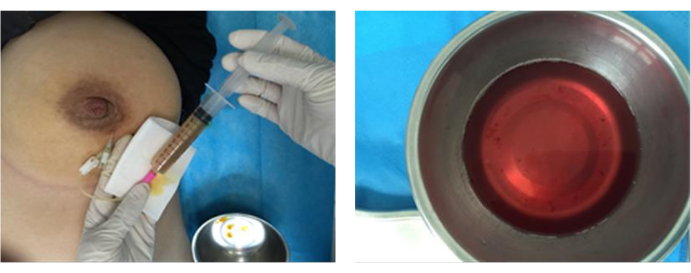
Figure 1: First treatment. On the first day of flushing, refer to the results of the B-ultrasound examination, and perform strict aseptic operation. The 20 G indwelling needle is connected to the 10 mL needle tube, which is punctured into the pus cavity, and the pus is removed. The pus cavity is flushed by injecting the same amount of 0.9% normal saline according to the amount of pus, and the flushing is continued 3-6 times until the flushed liquid is clear. Please click here to view a larger version of this figure.
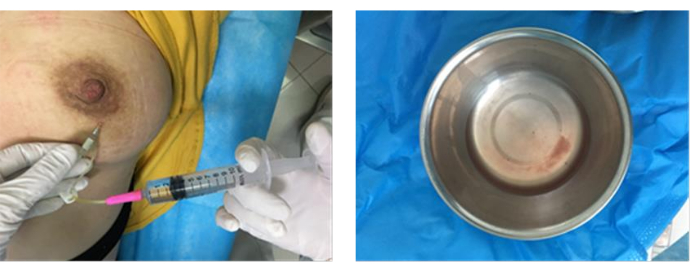
Figure 2: Follow-up procedure. On the 5th day of washing, the drainage was not purulent, and the washed liquid was clear. Please click here to view a larger version of this figure.
| group | n | Age/year | duration of illness/day | diameter of abscess cavity /cm | single/multiple breast abscess cavities |
| Incisive drainage group | 21 | 30.18 ± 3.21 | 6.16 ± 1.13 | 5.13 ± 2.11 | 12/9 |
| Indwelling needle group | 20 | 30.41 ± 3.66 | 7.01 ± 2.23 | 4.92 ± 3.36 | 13/7 |
| t/χ2 | –1.120 | –0.983 | 0.204 | 0.187 | |
| p | 0.153 | 0.277 | 0.776 | 0.553 |
Table 1: Comparison of general data between the two groups.
| Group | Pain VAS score | Healing days | Cure rate (%) | Complication (%) | Wound satisfaction (%) |
| Incisive drainage group | 7.51 ± 1.17 | 21.26 ± 3.06 | 66.7 | 19.05 | 52.4 |
| Indwelling needle group | 1.06 ± 0.23 | 11.23 ± 2.36 | 65 | 5 | 90 |
| t | -4.086 | 10.128 | 4.32 | 3.819 | -3.115 |
| p | 0 | 0.001 | 0.068 | 0.033 | 0 |
Table 2: Comparison of patient treatment data between the two groups
| Clinical factor | Treatment failure | Treatment success | χ2 | p |
| N = 7 | N = 13 | |||
| Duration of illness | 21.46 ± 3.18 | 7.61 ± 1.09 | 8.132 | 0.001 |
| Location of abscess cavity | 11.369 | 0.001 | ||
| Multiple quadrants | 6 | 2 | ||
| Single quadrant | 1 | 11 | ||
| Number of pus cavities | 10.816 | 0.001 | ||
| Multi-cavity abscess | 7 | 1 | ||
| Single cavity abscess | 0 | 12 | ||
| Size of the pus cavity(cm) | 5.12 ± 1.22 | 4.81 ± 1.13 | 0.766 | 0.31 |
| The maximum amount of pus aspiration (mL) | 0.028 | 0.866 | ||
| >30 | 4 | 5 | ||
| ≤30 | 3 | 8 |
Table 3: Clinical factors analysis of patients who failed to undergo puncture and flushing treatment.
| Positive for bacterial culture | Positive for Staphylococcus aureus | Staphylococcus aureus infected patients | ||||
| Incisive drainage group (n=21) | n = 15 | 71.40% | n = 11 | 52.40% | 11/15 | 73.30% |
| Indwelling needle group ( n=20) | n = 13 | 65% | n = 9 | 45% | 9/13 | 69.20% |
Table 4: Pus samples positive for bacterial cultures in the two groups.
Discussion
The first report of the pus in the breast abscess drained and irrigated using a syringe with or without the guidance of a B-mode ultrasound scan was in the 1990s4. Karstrup et al.11 used a pigtail catheter to manage acute puerperal breast abscess. Patients (n = 19) were punctured and irrigated using the pigtail catheter after local anesthesia under the guidance of a B-mode ultrasound scan, among which 18 cases (95%) were successfully treated and 8 cases (42%) continued breastfeeding during and after treatment. There was no recurrence after a follow-up of 12 months, and the appearance of the breast was not affected. Richard et al.5 reported that they treated 33 abscesses using 18 G needles and 10 mL syringes for puncture and flushing without the guidance of a B-mode ultrasound scan. Among the 30 patients, 25 were breastfeeding, and 2 were pregnant without lactation. The overall cure rate was 82%, and the cue rate for patients with symptoms appearing within 6 days was 100%. Their work indicated that puncture and drawing without the guidance of a B-mode ultrasound scan was low-cost but effective for breast abscess management.
The concept of damage control surgery pursues both functional integrity and aesthetic appearance, and abscesses are recommended to be treated with aspiration12 but not incision and drainage recently. Conventional incision and drainage create wounds larger than 2 cm and massive breast tissues are destroyed, which may induce complications such as breast leakage and bleeding13. Too long incisions could cause drainage fluid leakage, scar enlargement, breast collapse, and deformation14, which seriously affects the life quality and mental health of patients. In this study, the diameter of the 20 G indwelling needle was only 1.1 mm, and the wound was significantly smaller than that produced by the incision. At the same time, the tube of the indwelling needle is flexible, biocompatible, and easy to fix, and could avoid repeated irritation to the wound. The flow rate of drainage by the 20 G indwelling needle could reach 50 mL/min, reducing the operation time. The length of the tube was 3 cm, which could ensure sufficient drainage and avoid breast tissue damage caused by excessive operation. Our study showed that indwelling needles reduced pain, healing time, and complication rate and improved satisfaction with cosmetic effects. As for the cure rate, it was not superior in the Indwelling needle group than the Incisive drainage group, but it should be due to the relatively small sample size.
It has been reported that patients with abscesses larger than 5 cm, multi-cavity abscesses, and long-lasting abscesses were recommended to receive surgery management first. However, surgery was not suitable for lactating patients15. All patients in this study were non-lactating patients. The results indicated that failure of puncture and irrigation was not related to the size of the pus cavity and the maximum amount of pus aspiration, but was a result of the duration of the disease, the location of the pus cavity, and multi-cavity abscess. The abscess cavity's size was unrelated to the failure of puncture and irrigation treatment. However, the location of the pus cavity (especially when the pus cavity was located in multiple quadrants) and multi cavity-abscess were related to the failure of puncture and irrigation treatment. This study's failure rate for abscess puncture and irrigation treatment was still relatively high. One of the reasons is related to the small sample size, and the other is that patients with multiple abscesses or abscesses located in multiple quadrants have a higher probability of treatment failure after puncture and irrigation treatment. So, whether puncture and aspiration treatment is the first choice for these patients should be carefully considered in clinical work. Therefore, we should change to surgical treatment as soon as possible to avoid delaying treatment if puncture and irrigation treatment fail.
With regard to the necessity and indication of antibiotics, although antibiotics are widely used in the treatment of mastitis, the data supporting the use of antibiotics and guiding treatment are obviously insufficient. At present, there is no sufficient evidence to confirm or refute the effectiveness of antibiotic therapy in the treatment of lactating mastitis1. Based on experience, antibiotics are still recommended as an anti-infection method but are not used for the comprehensive treatment of breast abscesses during lactation16. In mild cases (without systemic symptoms, mild pain, or erythema), it is appropriate to only take conservative measures, but if the symptoms do not improve within 12-24 h or are diagnosed as moderate or severe (fever, severe pain, obvious fever or breast fever, or palpable masses), antibiotic treatment is required. During treatment, patients should be closely monitored. Further evaluation should be conducted if symptoms do not improve after a few days of appropriate treatment.
This study is retrospective and also limited by the number of cases. The rate of recurrence after NPM has been reported to be 7%-50%17,18, so regular follow-up is necessary. Besides, the lumen of the indwelling needle is relatively small, so one should be cautious of pipe folding, blockage, and falling off. When the abscess shrinks, the catheter may fail to reach the actual lumen or be displaced, so the puncture pipeline and drainage device should be further optimized.
Indwelling needle puncture and irrigation is a simple and less invasive method and deserve to be considered first for outpatients with single abscess.
Disclosures
The authors have nothing to disclose.
Acknowledgements
We thank the patients for joining in this research.
Materials
| Name | Company | Catalog Number | Comments |
|---|---|---|---|
| 20 G indwelling needle | Becton Dickinson Infusion Therapy Systems Inc | 20153143645 | Disposable intravenous indwelling needle |
| 10 mL/20 mL syringe | Shandong Weigao Group Medical Polymer Products Co., Ltd | 20142140076 | Disposable injection needles are used for subcutaneous, intramuscular and intravenous injection, blood drawing or drug dissolution. |
| Bacterial culture bottle | Ningbo Haishu Medical Products Factory | No. 1660109 | It is mainly used for medical units to collect secretion samples for clinical diagnosis and testing. |
| Curved plate | Xinmei Medical Equipment Co., Ltd | 1120042 | For putting used cotton swabs, yarn blocks and various discarded needles. |
| Gauze | Kangmin Sanitary Materials Development Co., Ltd | 20172640670 | For clinical wound protection and moisture absorption. |
| Hydrogen peroxide | Shandong Lierkang Medical Technology Co., Ltd | No. 0059 | It is suitable for disinfection of surface and skin wounds, and can kill intestinal pathogenic bacteria, purulent cocci and pathogenic bacteria. |
| Iodophor solution | Shandong Lierkang Medical Technology Co., Ltd | No. 0059 | Used for disinfection of skin, hands, mucous membranes, wounds and wounds. |
| Lidocaine (5%) | Hefeng Pharmaceutical Co., Ltd | H20023777 | Lidocaine hydrochloride injection |
| Medical adhesive tape | Minnesota Mining and Manufacturing | No. 1641433 | Medical adhesive tape used to fix the dressing on the wound, and it can also fix medical instruments such as infusion tubes on the surface of human body. |
| Normal saline | Kelun Pharmaceutical Co., Ltd | H20023817 | Used for washing operations, wounds, eyes, mucous membranes, etc. |
| Sterile cotton swabs | Kangmin Sanitary Materials Development Co., Ltd | 20192140583 | For skin disinfection |
| Sterile scissors | Xinmei Medical Equipment Co., Ltd | 1120042 | Used to cut off pterygium, blood tendons, skin, membrane, etc., mostly made of steel. |
| Therapeutic bowl | Xinmei Medical Equipment Co., Ltd | 1120042 | To contain sterile articles and keep them sterile. |
| Transparent adhesive film | Minnesota Mining and Manufacturing | 20182642128 | Used to cover and protect the catheter site and wound, maintain a moist environment for wound healing, and facilitate autolysis and debridement. It can also be used as a secondary dressing to protect the skin from damage and fix the instrument on the skin, and can also be used as an eye mask. |
| Ultrasound | PHILIPS | EPIQ 5 | The color ultrasonic diagnosis system |
References
- Scott, D. M. Inflammatory diseases of the breast. Best Practice & Research Clinical Obstetrics and Gynaecology. 83, 72-87 (2022).
- Goulabchand, R., et al. Mastitis in autoimmune diseases: Review of the literature, diagnostic pathway, and pathophysiological key players. Journal of Clinical Medicine. 9 (4), 958(2020).
- Kong, C., et al. The expression and meaning of CD68, CD163, CD57, and IgG4 in granulomatous lobular mastitis. Gland Surgery. 9 (4), 936-949 (2020).
- Tan, S. M., Low, S. C. Non-operative treatment of breast abscesses. The Australian and New Zealand. Journal of Surgery. 68 (6), 423-424 (1998).
- Schwarz, R. J., Shrestha, R. Needle aspiration of breast abscesses. The American Journal of Surgery. 182 (2), 117-119 (2001).
- Tanaka, K., et al. Minimally invasive and inexpensive percutaneous abscess drainage using an indwelling needle cannula. American Journal of Otolaryngology. 41 (6), 102664(2020).
- Jiming, Y., et al. Analysis of 87 cases of catheter drainage in Pediatric scalp hematoma. Chinese Journal of Practical Neruous Diseases. 14 (1), 70(2011).
- Hui, C., et al. Methods of drainage of pleural effusion by single use indwelling needle and negative pressure drainage device. Chinese Journal of Misdiagnosis. 6 (24), 4890-4890 (2006).
- Xiufeng, W., Luo, Y., Zeng, Y., Peng, W., Zhong, Z. Prospective comparison of indwelling cannulas drain and needle aspiration for symptomatic seroma after mastectomy in breast cancer patients. Archives of Gynecology and Obstetrics. 301 (1), 283-287 (2020).
- Natan, M. B., et al. Association between type of face mask and visual analog scale scores during pain assessment. Pain Management Nursing. 23 (3), 370-373 (2022).
- Karstrup, S., et al. Acute puerperal breast abscesses: US-guided drainage. Radiology. 188 (3), 807-809 (1993).
- Belonenko, G. A., et al. Diagnosis and treatment of inflammatory diseases of the mammary ducts. Khirurgiia(Mosk). 11 (1), 54-58 (2016).
- Yuxiang, Z., et al. Negative pressure drainage of the areola mini-incision in the treatment of mammary gland abscess. Chinese Journal of Breast Disease. Electronic Version. 8 (6), 54-55 (2014).
- Yizhong, Z., et al. Mammotome minimally invasive catheter drainage in the treatment of mammary abscess in mammary gland. Guangdong Medical Journal. 34 (24), 3779-3780 (2013).
- Lam, E., Chan, T., Wiseman, S. M. Breast abscess: Evidence based management recommendations. Expert Review of Anti-Infective Therapy. 12 (7), 753-762 (2014).
- Luo, J., et al. Abscess drainage with or without antibiotics in lactational breast abscess: Study protocol for a randomized controlled trial. Dove Press journal: Infection and Drug Resistance. 13, 183-190 (2020).
- Velidedeoglu, M., et al. Idiopathic granulomatous mastitis: Introducing a diagnostic algorithm based on 5 years of follow-up of 152 cases from Turkey and a review of the literature[J]. Surgery Today. 52 (4), 668-680 (2022).
- Co, M., et al. Idiopathic granulomatous mastitis:A 10-year study from a multicentre clinical database. Pathology. 50 (7), 742-747 (2018).
Reprints and Permissions
Explore More Articles
This article has been published
Video Coming Soon